Repair Lawn Heavy Equipment Damage: A Step-by-Step Guide
Published
Updated
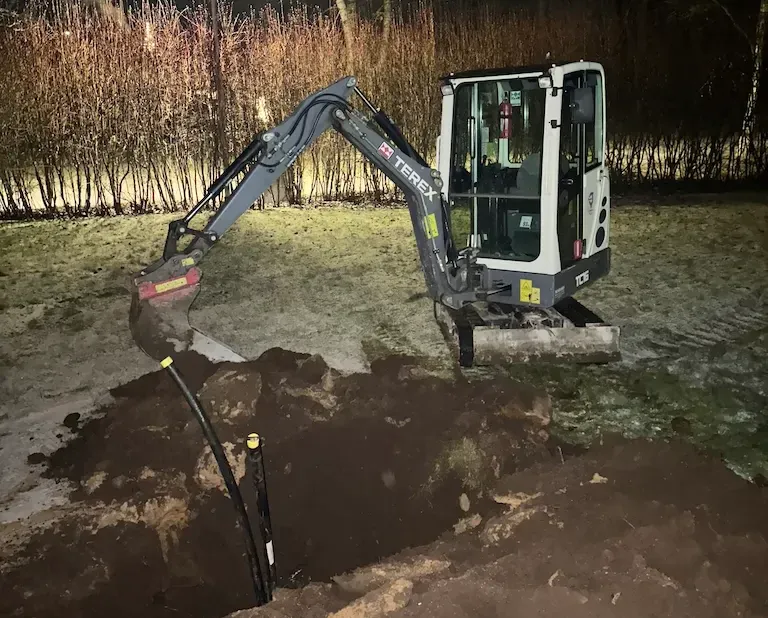
An excavator, drilling rig, or other heavy machine can leave much more than a muddy track across the lawn. Geothermal drilling, pool installation, construction work, and major landscaping can create deep ruts, displaced soil, bare patches, and compaction below the surface.
Heavy-equipment damage can extend below the visible ruts. Repairing the surface alone may leave compacted soil underneath, so assess both the grade and the root zone before choosing a repair.
Many repairs do not require starting over with the entire lawn. Surface ruts may need leveling, shallow compaction may respond to core aeration, and badly disturbed areas may need fresh soil and seed.
If the ground is hard beyond the visible tire ruts, our guide to fixing compacted clay soil without digging shows how aeration, topdressing, leveling, and overseeding can work together in the root zone.
Phase 1: Assessing the Aftermath
Before beginning the repair, distinguish among three common types of damage:
- Surface ruts: Tire or tread marks leave the lawn uneven and can collect water.
- Deep compaction: Machine weight compresses the soil below the visible track, restricting air, water, and root growth.
- Displaced subsoil: Drilling and excavation can bring heavy clay, rocks, or other subsoil to the surface.

Identifying the type and depth of damage helps determine whether the work calls for simple surface repair or professional soil and grading work.
Checking for Compaction
Push a screwdriver or soil probe into the damaged and unaffected areas when both have similar moisture. A clear difference in resistance can flag compaction, but it will not show the full depth of the problem. Dig a small inspection hole or seek a professional soil assessment when the damage is extensive.
Phase 2: Fixing Deep Soil Compaction
Heavy equipment can press soil particles closer together, reducing pore space, infiltration, drainage, and root growth. Raking the surface does not correct a compacted layer below it.
For shallow compaction in established turf, core aeration removes small plugs and creates openings through the upper root zone. A manual lawn aerator suits localized areas. Widespread or deep machinery compaction may require powered equipment or help from a soil or landscape professional.
Core Aeration vs. Spike Aeration
Where aeration is appropriate, core aeration removes soil plugs, while spike tools only displace soil around each hole and can add localized compaction. See Core Aeration vs. Spike Aeration for the differences. Core aeration treats the upper root zone, so deep subsoil compaction needs a different repair.
Phase 3: Leveling Ruts and Filling Holes
Do not simply hide a rut while leaving loose fill or compacted soil underneath. Restore the grade in stable layers using material compatible with the surrounding soil.
| Material | Role in the Repair |
|---|---|
| Compatible screened topsoil | Restores displaced soil and brings the repair close to finished grade |
| Finished, tested compost | Adds organic matter when indicated and used in a suitable amount |
| Existing suitable subsoil/backfill | Rebuilds deeper volume before the surface layer where appropriate |
For deep ruts, rebuild the profile in stable layers and match the surrounding grade. The right backfill and compaction depend on the depth, drainage, and intended use. Seek professional help where utilities, structural drainage, or extensive grading are involved.
Once deeper damage has been addressed and the ground is stable, a lawn leveling rake can help spread loose topdressing into shallow surface dips.
Our guide to leveling a bumpy lawn explains how to choose compatible material and spread it without burying the existing grass.
Phase 4: Soil Amendments for Clay Recovery
Let a soil test guide any amendments. Clay texture or construction traffic alone does not tell you which material the lawn needs.
- Gypsum (calcium sulfate): This can be appropriate for a laboratory-confirmed sodic soil when paired with adequate drainage and leaching water. It does not generally break up compacted clay and can add unnecessary salts when sodium is not the problem.
- Organic matter and nutrients: Use tested compost and fertilizer only at rates supported by soil-test results and the repair plan.
Phase 5: Selecting the Right Grass Seed
Once the deeper repair is complete, our guide to preparing clay soil for seed covers turning the restored bare ground into a firm seedbed.
A repaired lawn needs grass suited to the local climate, light, moisture, and expected traffic.
- Turf-type Tall Fescue: One cool-season option for sunny lawns with moderate traffic and limited irrigation.
- Perennial Ryegrass: A relatively fast-establishing cool-season grass often included in renovation mixtures.
After restoring the grade and addressing compaction, choose a regionally appropriate seed blend and prepare a firm seedbed with good seed-to-soil contact. See our guide to grass seed for clay and high-traffic recovery.
If you are re-establishing cool-season grass in fall, our fall overseeding guide covers preparation, seeding, and watering while the new grass takes root.
Finish the Repair
Heavy-equipment repair may take more than one growing period. Assess the damage, restore the grade, address confirmed compaction, and re-establish turf when conditions are suitable.
Where damage is deep, drainage is altered, or large amounts of subsoil have been displaced, involve a qualified contractor rather than relying on surface lawn treatments.
Frequently Asked Questions
Can I just throw grass seed over bare patches to fix a damaged lawn?
Simply scattering grass seed over a hard surface gives poor seed-to-soil contact. Remove loose debris, prepare a firm surface suitable for the selected grass, lightly incorporate or press the seed as directed, and keep the seedbed moist without saturating it. If mulch is needed, apply only a thin layer that will not obstruct emergence.
When is the best time of year to repair and overseed a lawn?
For cool-season turf, late summer to early fall is generally the preferred seeding period because seedlings have time to establish before the following summer. Exact timing depends on region and grass species. Warm-season grasses follow a different calendar, so use the locally recommended seeding window.
Why do bare patches keep reappearing in the same areas?
Repeated failure in the same area can indicate compaction, drainage, shade, traffic, contamination, unsuitable grass, or another site problem. Diagnose the cause before reseeding. Core aeration may help confirmed surface compaction but will not correct every cause or deep compacted layer.
How long does it take for a repaired lawn to become thick and usable again?
Germination and establishment vary widely by grass species, temperature, moisture, and site preparation. Keep traffic off the repair until the grass has been mowed enough times to show that it is rooted and growing steadily. Follow local guidance for the selected species rather than a universal calendar.