How to Fix Compacted Clay Soil Lawn (Without Digging)
Published
Updated
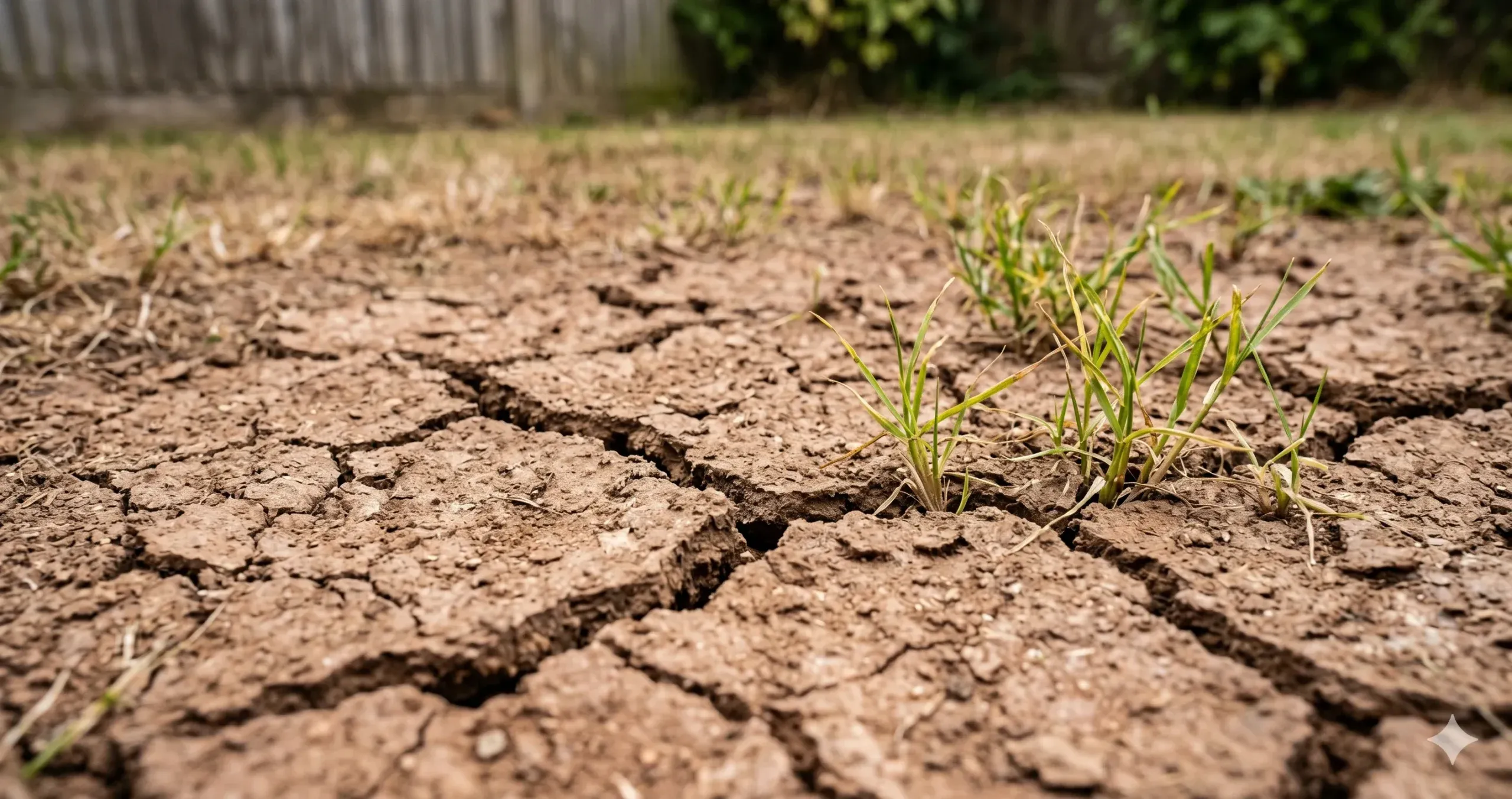
If a screwdriver barely enters your lawn even when the soil is moderately moist, compaction may be restricting water, air, and grass roots in the upper soil.
Clay soil is made up of microscopic particles that pack together tightly. Foot traffic and machinery can compress the pore spaces that would otherwise carry air and water through the root zone.
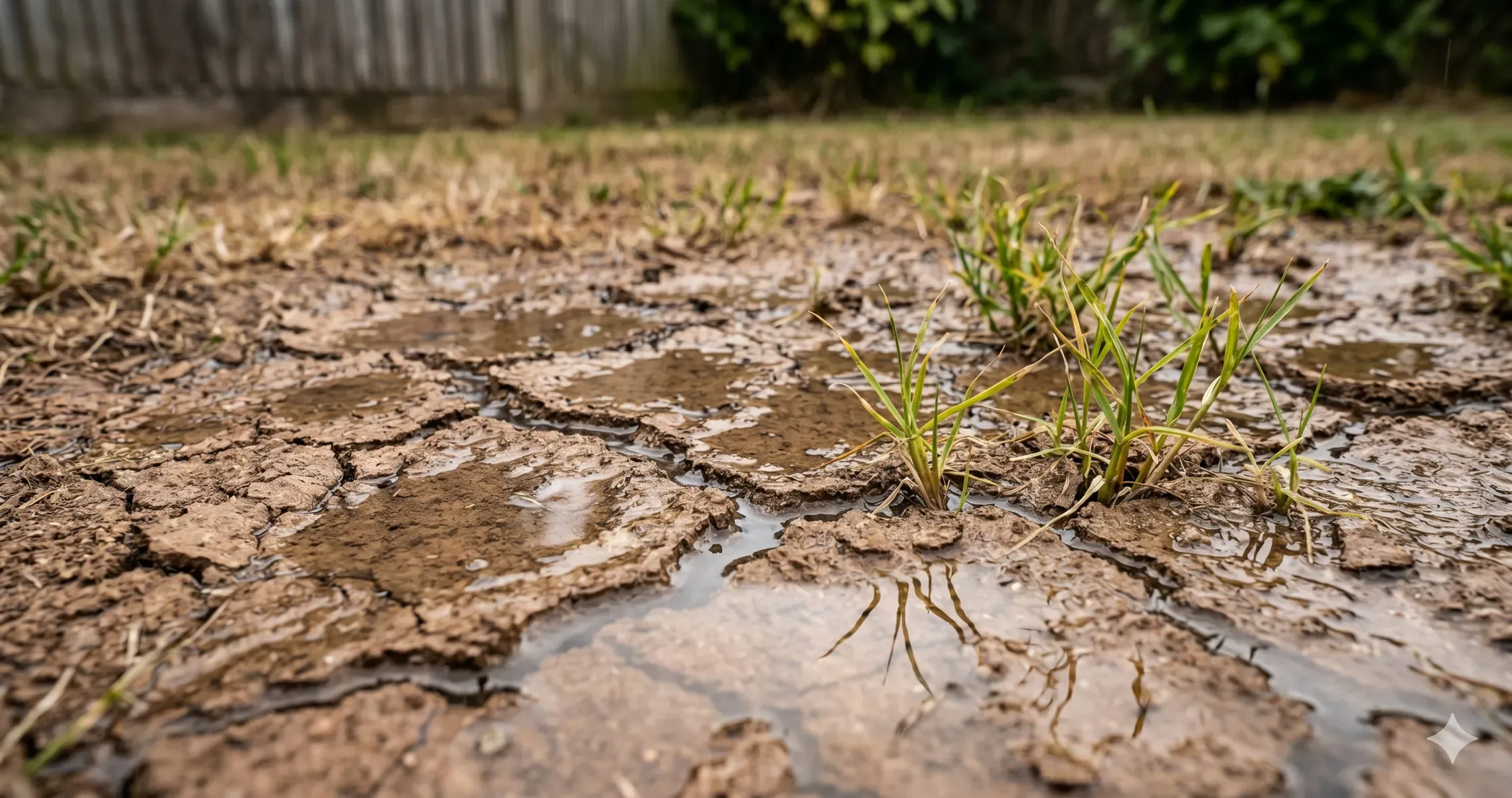
The result can be slow infiltration, shallow rooting, thin turf, and water pooling at the surface.
For shallow compaction in established turf, you can often improve the root zone without tilling up the lawn. Here is a practical sequence for diagnosing the problem, opening the soil, topdressing where useful, and rebuilding thin grass.
Signs Your Clay Lawn is Severely Compacted
Before treating the lawn, check whether several signs point to compaction rather than relying on one symptom:
- Standing water: Puddles that linger after rain can point to slow infiltration, but grade, runoff, and a high water table can produce the same symptom.
- Lawn cracks: Heavy clay can shrink and open fissures as it dries. Cracking alone does not prove compaction, so assess moisture and soil resistance together. If this is happening now, see how to fix clay soil lawn cracks.
- Thin turf and weeds: Bare openings can give dandelions and other weeds room to establish. Treat that as a cue to inspect the site, not proof of a single soil problem. Our guide explains how to remove dandelions from clay soil.
What Causes This Compaction?
Repeated foot traffic, play, and equipment can compact the upper root zone over time. Distinct deep tracks after construction or landscaping point to heavier machinery damage, which often needs grade and rut repair as well as compaction relief. Start with how to repair lawn damage from heavy equipment in that situation.
If the damage is confined to a hard strip beside paving, our compacted lawn-edge repair guide covers rebuilding that border.
A Four-Step Plan for Compacted Clay Soil
Once shallow compaction is confirmed, combine physical aeration with topdressing, surface repair, and turf recovery as the site requires.
If you are unsure whether the problem is compacted soil or a fibrous mat above it, use the dethatching-versus-aeration checks before choosing a treatment.
Step 1: Core Aeration
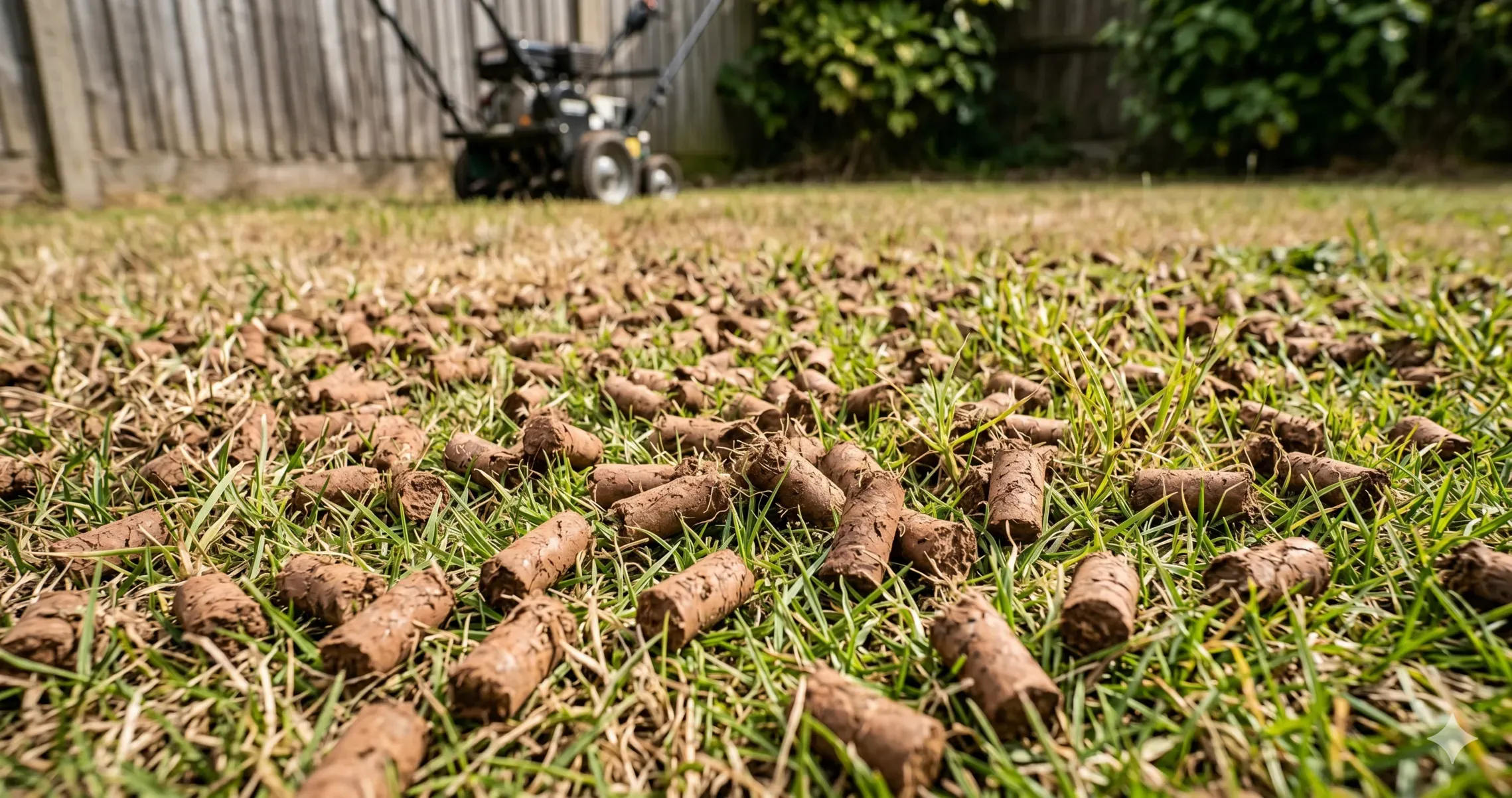
Our practical clay-lawn aeration guide walks through choosing a recovery window, checking soil moisture, and making a useful pattern of holes.
Core aeration is the key physical treatment in this plan. Hollow tines remove plugs and create pore space. Solid spikes displace soil and can compact the walls around each hole, making them a poor substitute where compaction relief is the goal.
To understand why this is crucial, read our deep dive into core aeration vs spike aeration.
For a few compacted patches, a manual tool can be practical; widespread compaction usually calls for powered equipment or a service. Use the core aerator type guide to weigh the work area and access before choosing. If a hand tool fits, see our guide to the best manual core aerators or compare the Yard Butler and Walensee aerators if you are deciding between those two models.
Step 2: Topdress with Organic Matter
Our topdressing walkthrough explains how to estimate the amount, test a small area and brush material between the grass blades.
After aeration, topdressing can introduce suitable organic material at the surface and into some of the open holes.
Quality finished compost can add organic matter at the surface after aeration. Apply a thin layer that leaves grass visible. Topdressing supports gradual soil improvement but does not replace aeration or correct deep compaction.
Shoveling compost across a larger lawn is slow and physically demanding. A rolling mesh spreader can sift screened material into a thinner, more consistent layer. Our peat moss and compost spreader comparison explains which size and handle style fit different lawns.
Step 3: Level Out the Bumps
Compaction can occur alongside shallow bumps or low spots, especially after heavy traffic or machinery use.
If the surface also has shallow bumps or low spots, work on them while the topdressing material is available. Our guide to leveling a bumpy lawn covers when a thin layer is enough and when deeper repair is needed.
For a smoother finish after topdressing, a lawn leveling rake can help spread material more evenly across the surface. See our guide to the best lawn leveling rakes for options suited to different lawn sizes and budgets.
Step 4: Rebuild a Healthy Grass Stand
Once the soil has been aerated, topdressed, and leveled, filling thin areas with healthy grass can help the lawn recover and make better use of the improved soil conditions.
Choose grass seed based on your climate, sunlight, moisture, and how the lawn is used rather than soil texture alone. Turf-type Tall Fescue can be a useful option where it is well adapted because of its relatively deep rooting, while Perennial Ryegrass is valued for quick establishment. See our guide to the best grass seed for clay soil for suitable options.
Germination speed depends on grass species, soil temperature, moisture, and seed-to-soil contact. Our guide to grass-seed germination in clay soil explains when to expect the first shoots and what to check if they do not appear.
If a thin cool-season lawn needs seed during a suitable autumn growing window, our fall overseeding guide walks through preparation, sowing, and establishment.
Summary
Start by confirming shallow compaction rather than diagnosing from one symptom. Core aerate while the grass can recover, use a thin compatible topdressing where it fits the plan, correct shallow unevenness, and reseed bare areas with grass suited to the site. Reassess before repeating the work. Deep machinery compaction, poor grade, and persistent drainage problems need a different repair.