How to Remove Dandelions from Clay Soil Without Breaking the Root
Published
Updated
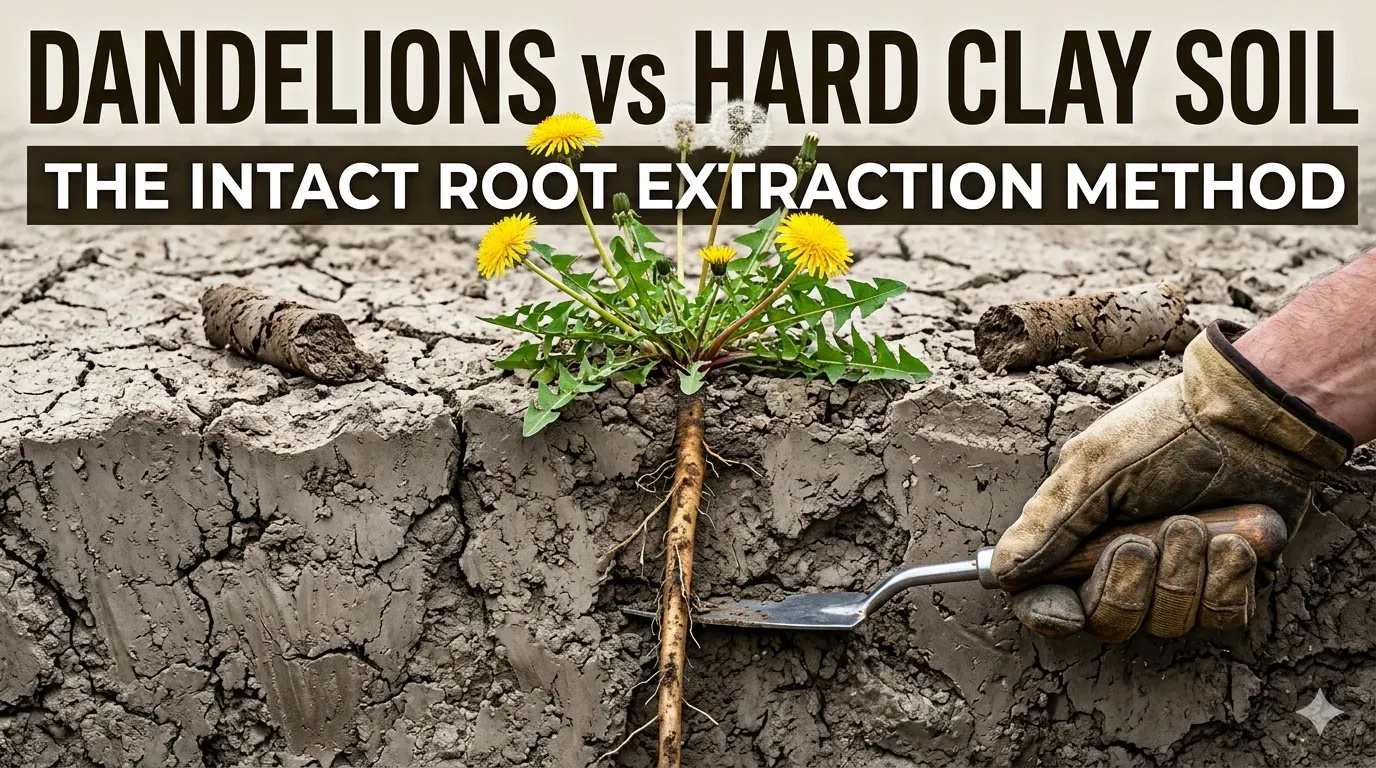
For scattered dandelions, removing the taproot is the most direct fix. In dry, firm clay, the leaves can break away while part of the root stays behind and produces new growth. Slightly moist soil and careful tool placement give the root a better chance of coming out intact.
Hand removal suits individual plants and small patches. Larger infestations may call for a selective lawn weed-control product that is labeled for the grass species and site. Either way, repairing thin or bare turf helps reduce the open space where new seedlings can establish.
If dandelions are appearing alongside thin grass and hard, compacted ground, weed removal may only address part of the problem. Our complete guide on how to fix compacted clay soil without digging explains how to improve the root zone and create better growing conditions for the grass competing with those weeds.
Why the Root Matters
A dandelion’s taproot can extend well below the crown. New plants can grow from root sections left in the soil, so hand removal should take out as much of the taproot as practical. The method is most manageable while plants are young and the soil is slightly moist.
Step-by-Step Removal
Step 1: Check the Soil Moisture
Work after rainfall or water the immediate area in advance if the clay is hard and dry. The soil should yield to the tool without being saturated or muddy.
Step 2: Choose a Suitable Tool
A narrow weeding knife, dandelion fork, or stand-up puller can reach below the crown. Stand-up designs use claws and leverage to lift the plant without requiring the same kneeling position as a hand tool.
Our stand-up weed puller comparison explains the different gripping and release mechanisms if you are choosing a tool.
Grampa’s Weeder is a good fit for scattered dandelions when you want a simple stand-up lever tool rather than a sliding ejector mechanism. Its bamboo handle and one-piece steel four-claw head keep the design simple. Accurate placement and slightly moist soil still matter when you are trying to lift more of the taproot.

Step 3: Pull the Root
Follow the instructions for the chosen tool. A typical stand-up puller is used as follows:
- Place the claws of your weeding tool directly over the center of the dandelion.
- Press the claws into the moist soil using the foot platform.
- Use the tool’s specified tilt, twist, or lever motion.
- Lift steadily and inspect how much of the taproot came out. Rework the spot if a substantial section remains accessible.
Step 4: Fill the Void
Press displaced turf back into place. A larger bare hole can be filled with compatible topsoil and repaired with grass suited to the site and season. The guide to grass seed options for clay soil explains the selection factors.
When Hand Removal Is Not Practical
Hand removal is useful for scattered plants or small patches. For a widespread infestation, a selective post-emergence herbicide labeled for dandelions and the lawn species may be more practical. Read and follow the current label, including its timing, approved sites, weather, and safety directions. Avoid treating plants you cannot confidently identify.
The Long-Term Fix
Dense, healthy turf leaves less open space for dandelion seedlings. Match mowing, irrigation, fertility, and grass selection to the lawn, then repair bare areas where new weeds can establish. If the soil is compacted, the guide to core aeration vs. spike aeration explains the difference between those treatments.
Frequently Asked Questions
Why do some lawns have so many dandelions?
Dandelions establish readily in thin turf and disturbed or bare areas. Review grass density, mowing, irrigation, soil test results, and site conditions. If the ground is also hard and compacted, core aeration can become part of the repair.
Does pulling dandelions by hand actually work?
It can work well for individual plants and small patches. Remove as much of the taproot as practical, preferably while the plant is young and the soil is slightly moist. Regrowth is possible when root sections remain.
Should I mow over dandelions?
Mowing flower stalks before seed heads mature can reduce seed production, but it does not kill the established taproot. Once seed heads are mature, avoid actions that unnecessarily disperse them.
How do I stop dandelions from coming back every year?
Maintain dense turf with the mowing height, fertility, irrigation, and grass species appropriate to the region and site. Repair bare areas during a suitable establishment window and continue removing new plants before they set seed.