
Disclaimer: When you buy through links on our site, we may earn an affiliate commission at no extra cost to you.
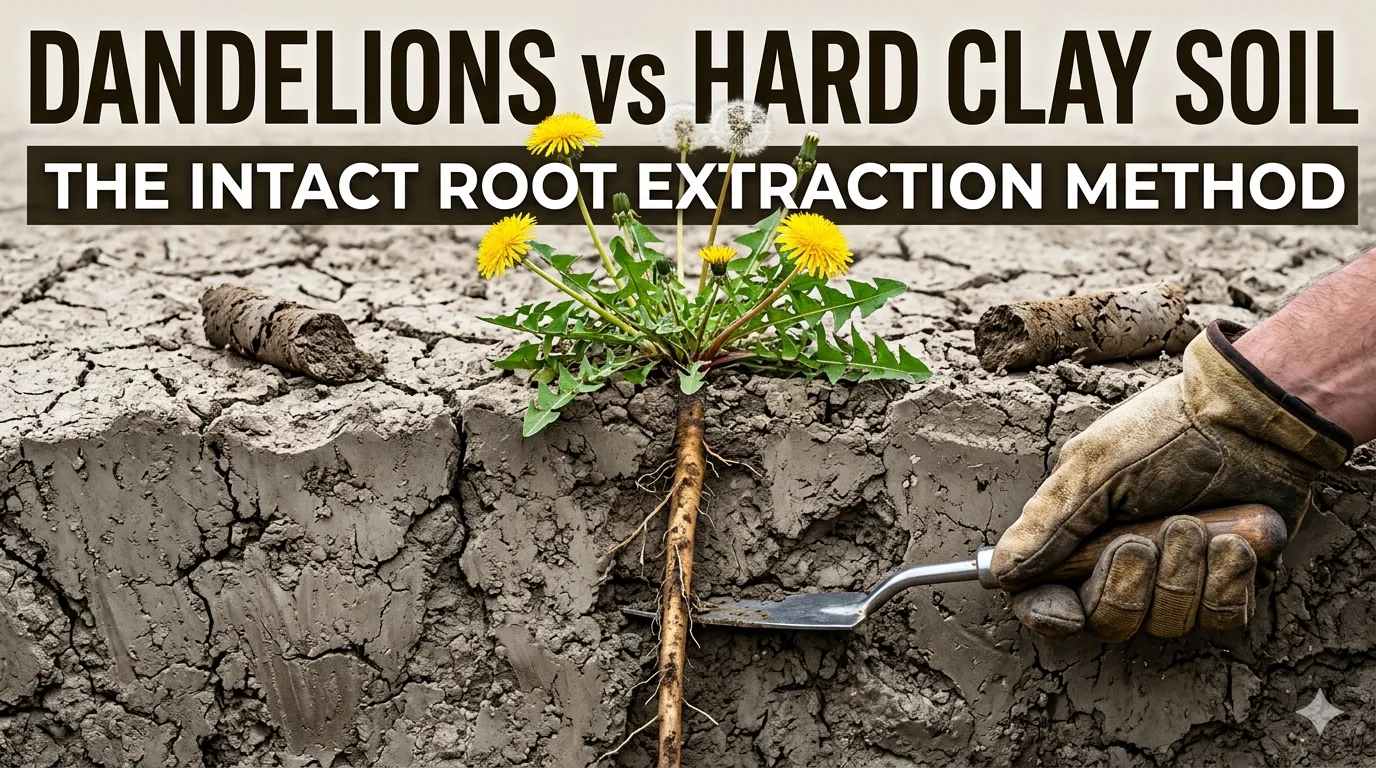
Clay soil acts like a concrete trap for weed roots. If you try to fight them without a plan, you will lose. Here is my exact, Mender-approved method to remove dandelions from clay soil – permanently.
There is nothing more frustrating than looking out at your lawn on a sunny spring day and seeing a sea of bright yellow spots. Dandelions are the ultimate lawn enemy, but if you live on heavy clay soil, they are a special kind of nightmare.
When I started fixing my 1,000 sqm clay lawn, I spent hours on my hands and knees trying to pull them out, only to have the delicate stem snap, leaving the root deep in the ground. Within a week, the dandelion was back, bigger and stronger.
Why Dandelions Love (and Rule) Clay Soil
To defeat the enemy, you have to understand them. Dandelions don’t just grow in clay by accident; they thrive in it because of their unique anatomy.
Unlike grass, which has shallow, fibrous roots, a dandelion has a massive taproot. This is a thick, fleshy root that grows straight down, often over 6 to 10 inches deep.
Compacted clay soil suffocates most plants because it lacks air pockets. The dandelion’s powerful taproot is one of the few things capable of drilling through this hard earth. While the grass is struggling to breathe, the dandelion is tapping into water and nutrients deep below the surface.
The Trap: Why You Must Never Pull Dandelions When It’s Dry
This is the number one mistake made on clay lawns. When clay soil is dry, it shrinks and forms a brick-like bond around anything inside it.
If you try to pull a weed out of dry clay, you will only pull up the leaves and maybe the very top of the root. The lower 80% of the taproot will break off and stay in the soil.
Dandelions are incredibly resilient; they can regrow an entire new plant from a root fragment less than an inch long. Snapping the root is essentially just pruning it.
Step-by-Step: The Mender Method to Kill Dandelions in Clay
Here is how you actually get that long root out in one satisfying piece.
Step 1: Soften the Concrete
You need to lubricate the extraction. Never, ever fight dry clay.
- The timing: The best time to remove dandelions is the day after a heavy rain shower.
- The hack: If there’s no rain in the forecast, take a watering can and soak the area around each dandelion. Give it 15 minutes to soak in and soften the ground before you do anything.
Step 2: Choose Your Weapon (The Leverage Game)
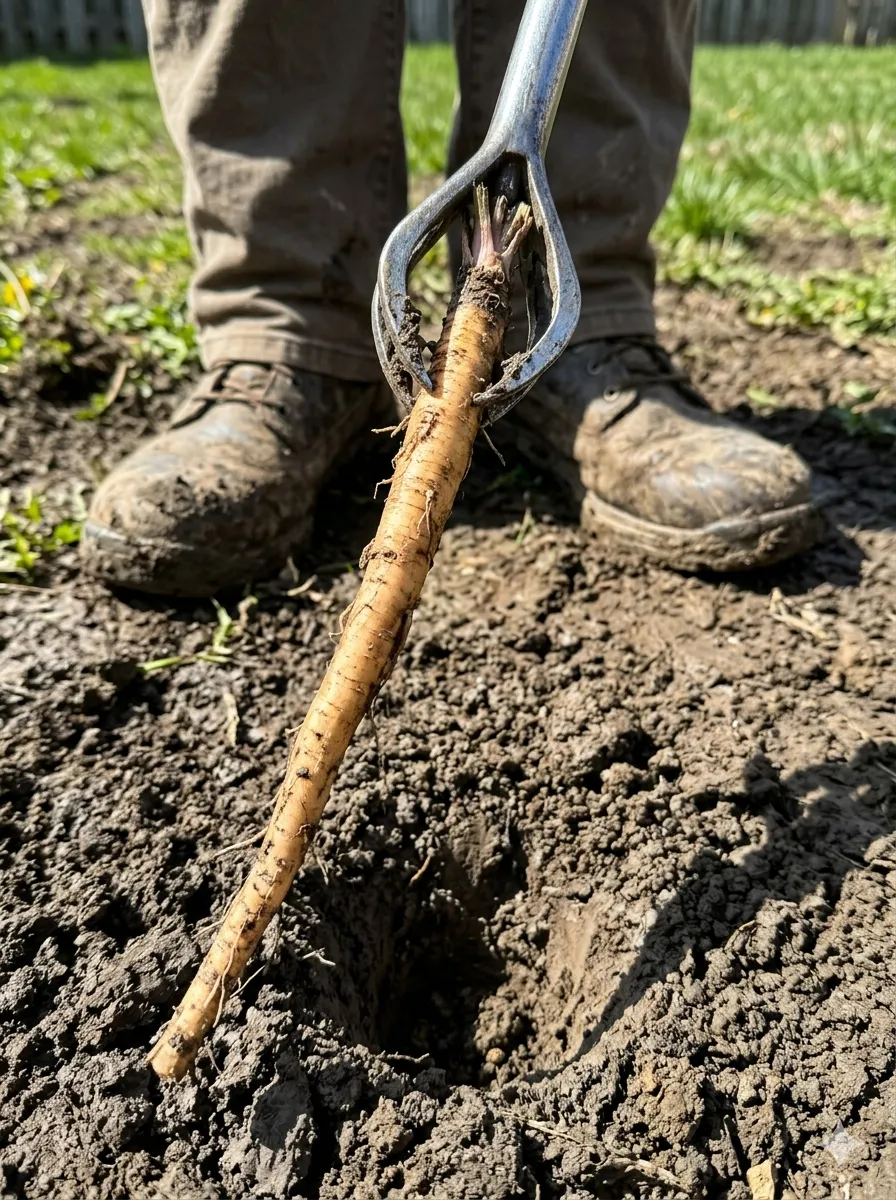
Do not try this with a simple hand trowel. To pull a 10-inch root out of clay, you need leverage. You need a stand-up weeding tool. These tools have claws that grab the root and a foot pedal that creates a lever action to pry the root out.
My go-to is Grampa’s Weeder, a simple, genius design that has been around for almost a century. It requires zero bending and uses raw physics to pull out even the deepest roots without snapped fragments.
Step 3: The Extraction
This is how it’s done:
- Place the claws of your weeding tool directly over the center of the dandelion.
- Use your foot on the pedal to drive the claws deep into the soft, wet clay.
- Depending on the tool, you either tilt the handle or step on the leverage bar. You will feel a satisfying pop as the long taproot is released from the soil’s grip.
- Pull up the tool and marvel at the giant, intact root you just removed.
Step 4: Fill the Void
You have just created a deep, empty hole in your compacted lawn. If you leave it, it will just fill with water, re-compact, or become a home for a new weed seed.
Immediately fill the hole with a mix of topsoil and grass seed. Check out my guide on the Best Grass Seed For Clay to find the right blend to quickly patch these spots.
The Long-Term Fix
Removing individual weeds fixes the symptom, but not the cause. If your lawn is covered in dandelions, it is screaming at you that the soil is too compacted.
To stop them from coming back year after year, you must fix the soil. You need to aerate to reduce compaction. I highly recommend reading my guide on Manual Core Aeration vs Spike Aeration to learn how to open up your soil so that grass can compete, and dandelions have nowhere to drill.
Stick to the method, soften the clay, and get those roots out
Frequently Asked Questions
Feel free to ask anything you like, below are some answers you might be looking for.
Why does my lawn have so many dandelions?
Dandelions thrive in thin, compacted soil where grass struggles to grow, making them very common in heavy clay lawns. Their long taproots can easily penetrate hard ground. A severe dandelion problem is often a sign of low soil fertility and high compaction, meaning core aeration and topdressing are needed to help the grass compete.
Does pulling dandelions by hand actually work?
Yes, but only if you extract the entire taproot. If the root snaps off—which happens easily in dry, hard soil—the dandelion will simply grow back. Using a dedicated stand-up weed puller after a good rain is the most effective way to remove the whole root without using chemicals.
Should I mow over dandelions?
Mowing over yellow dandelion flowers is fine and can temporarily stop them from maturing. However, if they have already turned into white “puffballs” (seed heads), mowing will instantly scatter thousands of seeds across your entire yard. Always bag your grass clippings if you mow over mature dandelions to prevent a massive outbreak next season.
How do I stop dandelions from coming back every year?
The best long-term weed control is a thick, healthy lawn. By overseeding bare patches, mowing tall (around 3 to 4 inches), and improving your soil health, the grass roots will grow dense enough to choke out weeds and block sunlight from reaching new dandelion seeds.