
Disclaimer: When you buy through links on our site, we may earn an affiliate commission at no extra cost to you.
If you are trying to improve heavy clay soil, level out a bumpy yard, or overseed your lawn, you already know that topdressing with compost or peat moss is the ultimate secret weapon.
But if you’ve ever tried spreading those materials using a wheelbarrow and a shovel, you also know it is backbreaking, exhausting work. Even worse, the shovel method leaves thick clumps in some spots and bare dirt in others, which can suffocate your grass.
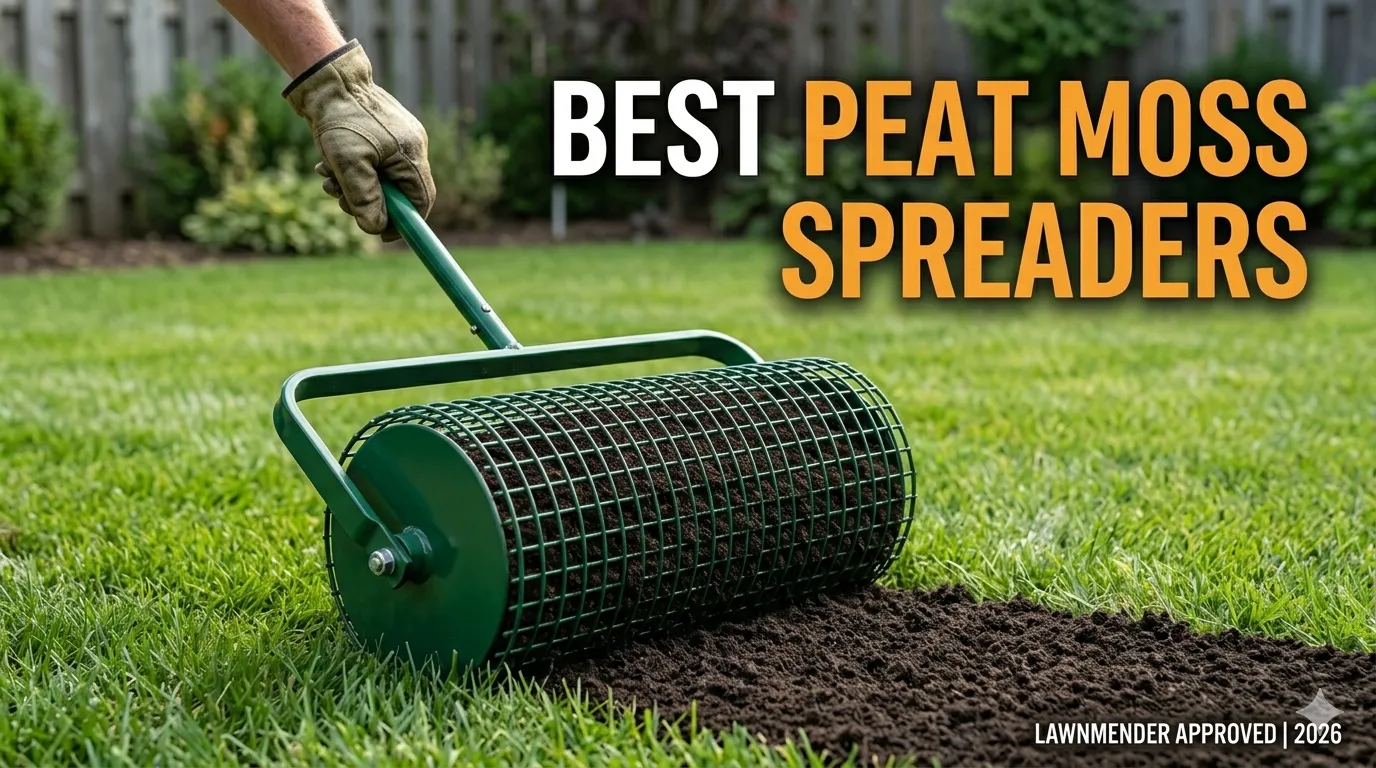
Enter the Peat Moss Spreader (also known as a compost roller). This simple but genius metal barrel will cut your working time in half and give you a perfectly even, golf-course quality spread. Here are the best peat moss spreaders on the market and why you need one in your tool shed.
Why a Spreader is Mandatory for Clay Soil
When we deal with compacted clay, applying organic matter (like compost or peat moss) is how we invite earthworms, improve drainage, and naturally break up the hard dirt over time.
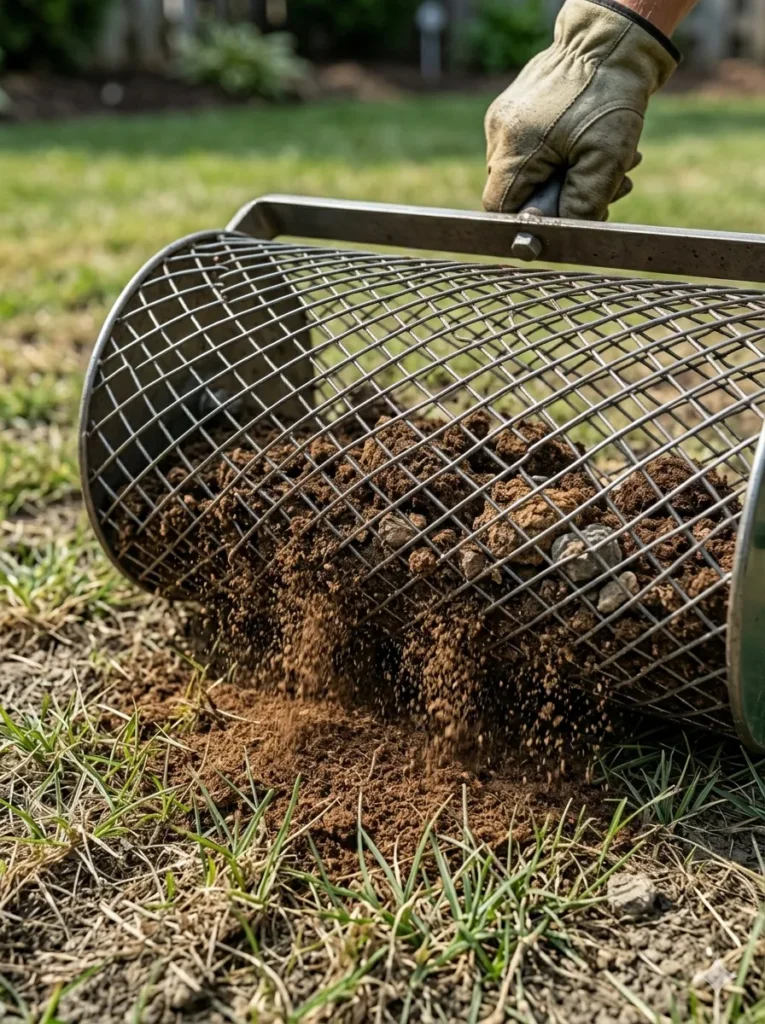
However, clay lawns are already struggling for oxygen. If you dump heavy piles of compost on the grass with a shovel, you will smother the blades. A peat moss spreader uses a steel mesh cage to break up clumps and drop a perfectly uniform 1/4-inch to 1/2-inch layer of material. The grass blades can instantly poke through, and the soil gets the exact amount of nutrients it needs.
If you are dealing with clay cracks in your summer lawn, a spreader is the perfect tool to fill those cracks and help mend your lawn.
Pro tip
🥇 Top Pick: The Landzie 24-Inch Peat Moss Spreader
When it comes to topdressing, Landzie is the gold standard. This is the tool you will see professional landscapers and serious lawn care nuts using.
- Why it wins: It is built like a tank. The entire body is made of powder-coated steel, meaning it won’t rust or dent easily if you hit a rock. The 24-inch width is the perfect sweet spot – wide enough to cover ground quickly, but narrow enough to maneuver around trees and garden beds.
- The Best Feature: The heavy-duty double-locking clasp. Cheaper spreaders tend to pop open when rolling over bumpy ground, spilling a mountain of dirt. The Landzie stays firmly shut.
🥈 Best Budget Alternative: Walensee Lawn Spreader
If the Landzie is out of your budget, the Walensee is an excellent runner-up for the average homeowner who only topdresses once or twice a year.
- Why it’s great: It features a very similar 24-inch steel mesh barrel and does a fantastic job of breaking up clumpy compost. It is slightly lighter than the Landzie, which makes it easy to push, though you might need to be a bit gentler with it over time.
- Keep in mind: The handle design isn’t quite as ergonomic as the premium models, but for the price point, the performance is hard to beat.
The “Mender’s Tip” for Using a Compost Roller
I’ve used these rollers on my own 1,000 sqm lawn project, and there is one golden rule you must follow to avoid frustration: The material must be dry.
If you buy bags of compost or peat moss and they are soaking wet and muddy, the spreader will clog. The damp dirt will stick to the metal mesh instead of falling through.
- The Fix: If your material is wet, dump it on a tarp in the sun for a few hours before filling your spreader. It will roll out like powdered sugar!
Read more
Frequently Asked Questions
These are questions I often hear, maybe they can help guide you too.
Can you use a regular broadcast spreader for peat moss or compost?
No. Regular broadcast or drop spreaders are designed for small, uniform particles like fertilizer and grass seed. Peat moss and compost hold moisture and contain larger particles that will immediately clog a standard lawn spreader. You need a dedicated metal mesh drum spreader to properly sift and distribute organic matter.
Do I need to mix peat moss with sand to level a clay lawn?
If you have heavy clay soil, adding pure sand can sometimes create a concrete-like texture. Instead of sand, using a high-quality organic mix of compost and topsoil is the best way to amend the clay while safely leveling out ruts and bumps in your yard.
What happens to the clumps, rocks, and sticks in the compost?
The biggest advantage of a rolling peat moss spreader is that the steel mesh acts as a sifter. The fine, nutrient-rich material falls perfectly through the mesh onto your grass, while all the large clumps, rocks, and sticks remain trapped inside the drum. You simply dump the leftover debris into a wheelbarrow before your next refill.
Is a compost spreader worth the money for annual topdressing?
Yes. Shoveling and raking compost by hand is backbreaking work that often results in an uneven lawn. A spreader cuts the project time in half, saves your back, and leaves a professional, golf-course quality finish. If you topdress yearly to improve your soil, it is an essential tool that pays for itself in saved time and physical effort.
As an Amazon Associate I earn from qualifying purchases.