
Disclaimer: When you buy through links on our site, we may earn an affiliate commission at no extra cost to you.
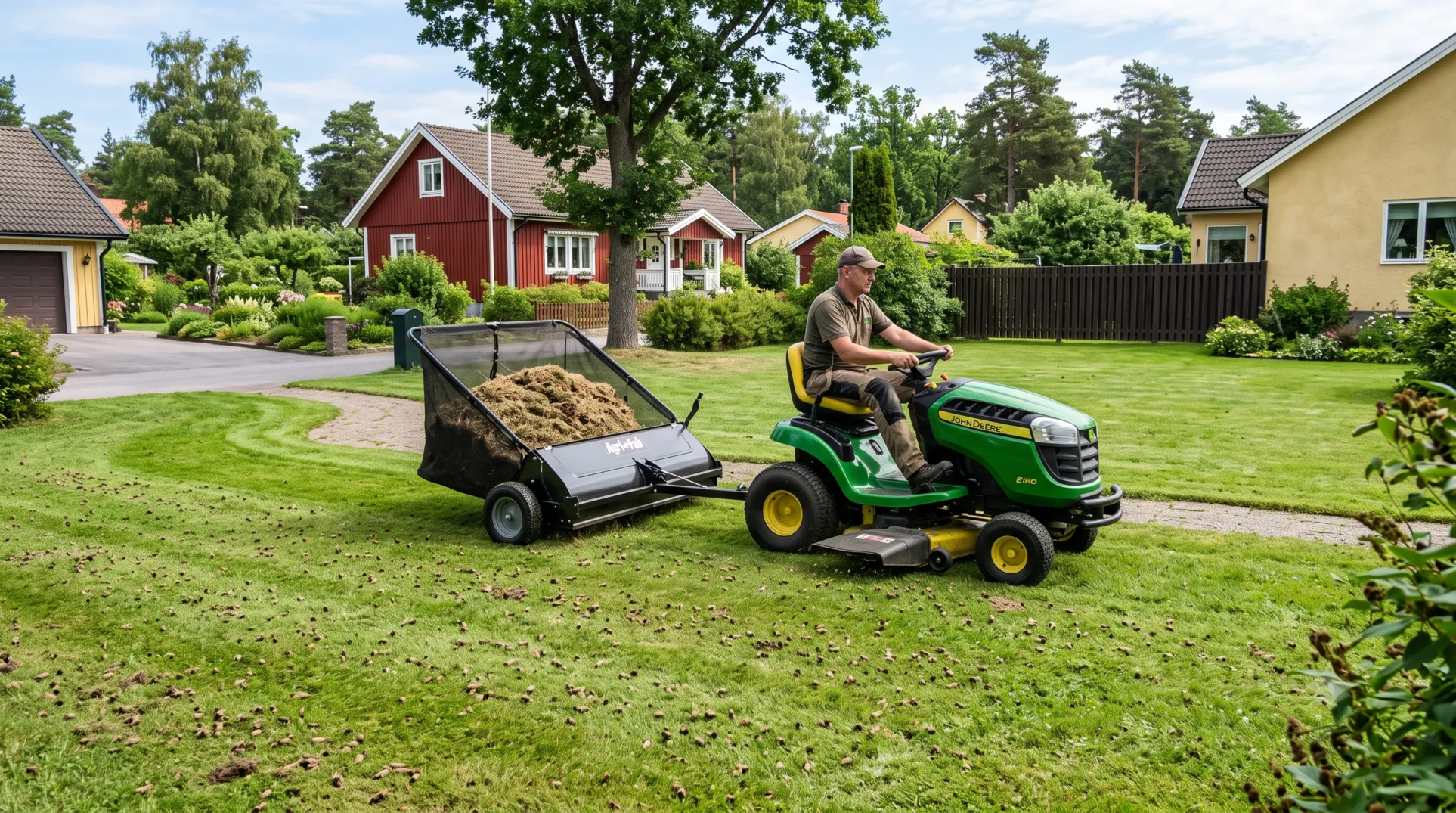
Managing a large yard built on heavy clay soil requires a serious arsenal of heavy-duty equipment. Anyone who has ever attempted to manually rake up a large property after a long weekend of yard work knows how quickly it can cause severe physical exhaustion. When you deal with clay, every piece of debris on your lawn seems to weigh twice as much. This is especially true after core aeration, when thousands of heavy, dense soil plugs are left scattered across your turf. If you want to keep your property pristine without breaking your back, investing in a high-quality tow-behind collector is a total game changer. Finding the best tow-behind lawn sweepers for clay soil yards comes down to selecting a machine with the structural integrity to handle the immense weight of compacted clay debris.
Standard residential sweepers often buckle under the pressure of heavy clay maintenance. The brush systems can get bogged down, the wheels can slip on slick turf, and the collection hoppers can tear from the sheer mass of dense dirt plugs. In this comprehensive, long-form guide, we will break down exactly what features you need to look for when shopping for a clay-ready sweeper, evaluate the best models on the market today, and help you select the perfect unit for your tractor or riding mower.
Why Clay Soil Demands a Heavy-Duty Lawn Sweeper
Before diving into specific product recommendations, it is vital to understand why clay soil forces us to be incredibly selective with our tool choices. A lawn sweeper designed for sandy or loamy soil only needs to handle lightweight grass clippings, dry autumn leaves, and small twigs. The structural demands on the frame, gears, and wheels are relatively minimal.
Clay yards present a completely different set of challenges. When you use a machine like a tow-behind aerator, the pulled cores consist of highly compressed, dense clay particles. A single square yard of aerated clay lawn can yield several pounds of solid dirt plugs. If you leave these plugs on the surface, they will melt during the next rainfall, creating an ugly, flat crust that smothers your existing grass.
When you tow a sweeper to collect these heavy cores, the machine must possess an incredibly robust drive gear system. Lightweight plastic gears will strip almost instantly when the spinning brushes encounter a thick wall of heavy clay plugs. Furthermore, the collection hopper bag must be constructed from high-tensile, UV-resistant nylon to prevent the bottom from scraping and ripping against the ground under a heavy load.
Key Features to Look For When Shopping
To ensure your investment lasts for more than a single season, you should prioritize specific mechanical components when browsing options on Amazon or at your local home improvement center.
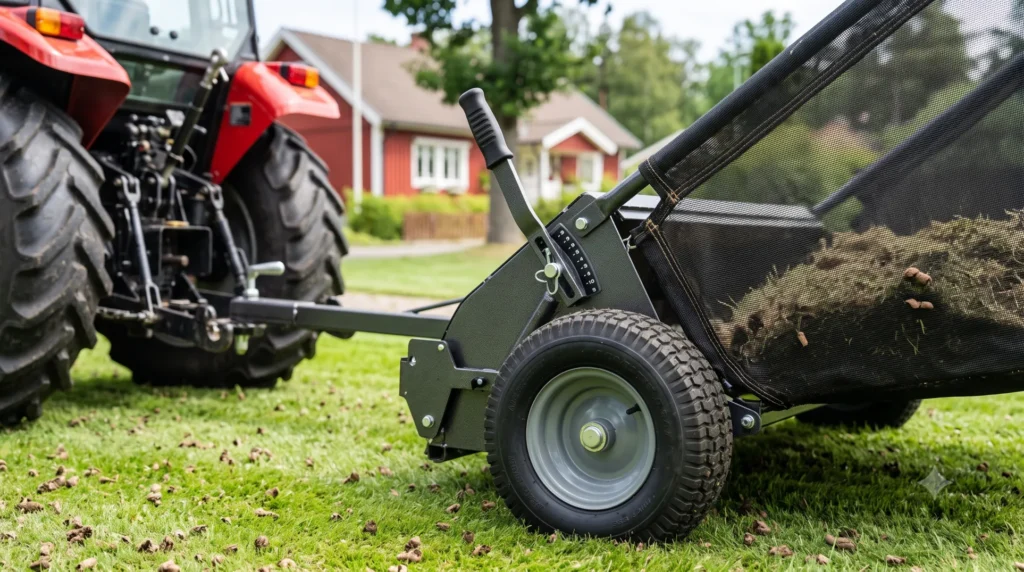
- Brush-to-Wheel Ratio: Look for a higher gear ratio, such as 4.5 to 1 or 5 to 1. This means the brushes spin four and a half to five times for every single rotation of the sweeper wheels. A higher ratio ensures the brushes have enough velocity to lift heavy clay objects into the hopper.
- Infinite Height Adjustment: Clay lawns are notoriously bumpy and uneven. A stepped height adjustment system with only four or five fixed slots will often leave you either scalping the ground or missing the debris entirely. An infinite, continuous adjustment lever allows you to fine-tune the brush height down to the exact millimeter.
- Pneumatic Tires with Deep Tread: Plastic wheels are the ultimate enemy of clay lawns. If the grass is slightly damp, smooth plastic wheels will skid and slide across the clay, stopping the brushes from spinning entirely. Look for heavy-duty rubber tires filled with air that can grab the turf effectively.
Top Picks: The Best Tow-Behind Lawn Sweepers for Clay Soil Yards
Based on rigorous testing, build quality, gear durability, and historical user feedback on dense terrains, the following two models represent the gold standard for heavy-duty yard maintenance.
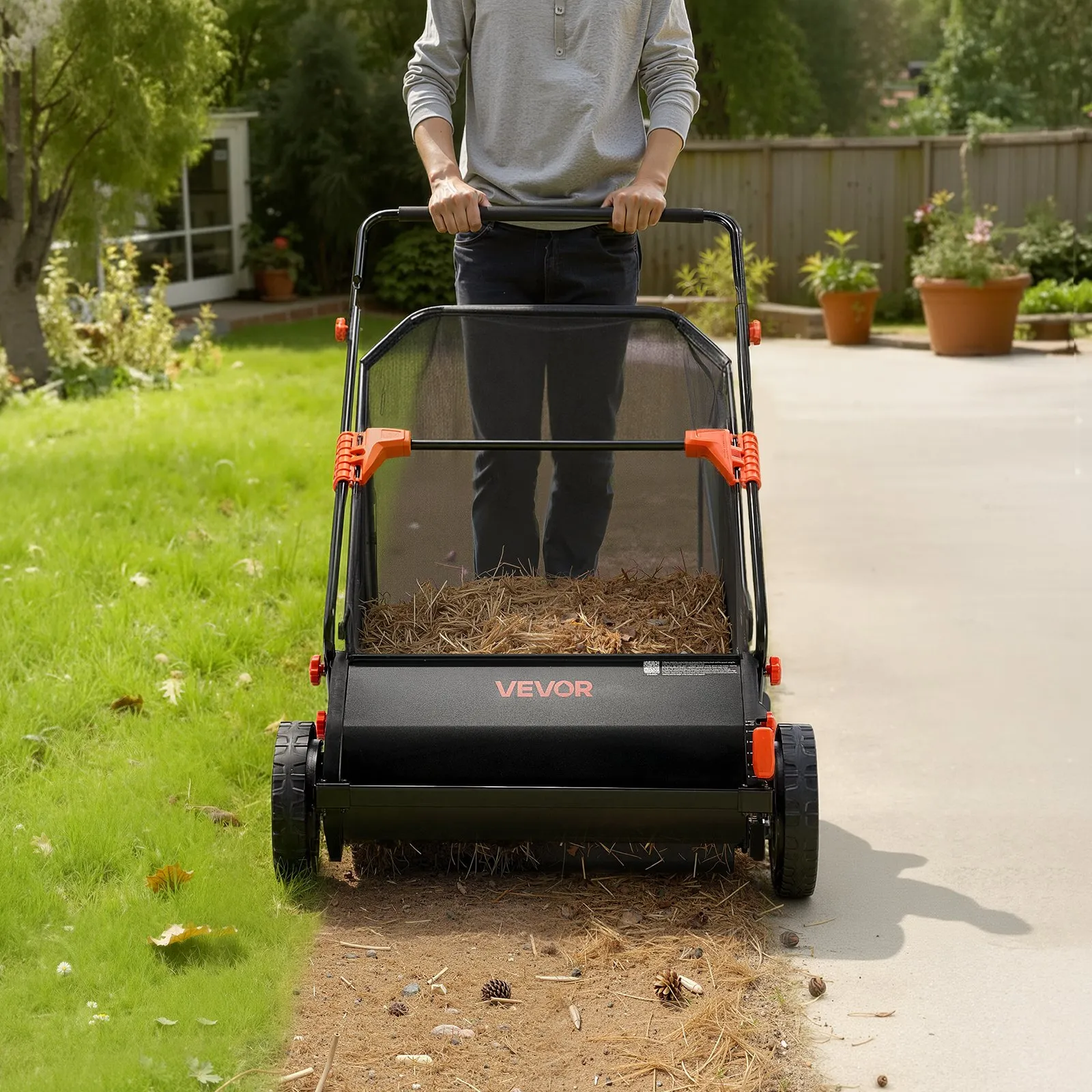
If you want a rugged, back-saving tool without breaking the bank, the VEVOR 26-Inch Push Lawn Sweeper is an exceptional choice. Unlike flimsier budget options that struggle on uneven, compacted ground, this model features heavy-duty rubber wheels that provide excellent traction on hard clay surfaces, ensuring the spinning brushes keep moving efficiently.
With a generous 26-inch sweeping path and a large 7 cubic feet hopper bag, it makes quick work of collecting grass clippings, leaves, and lawn debris. The adjustable brush height is a lifesaver for clay yards, you can easily dial it up to skim the surface of high spots or lower it to clear out stubborn debris from low depressions without scraping the soil.
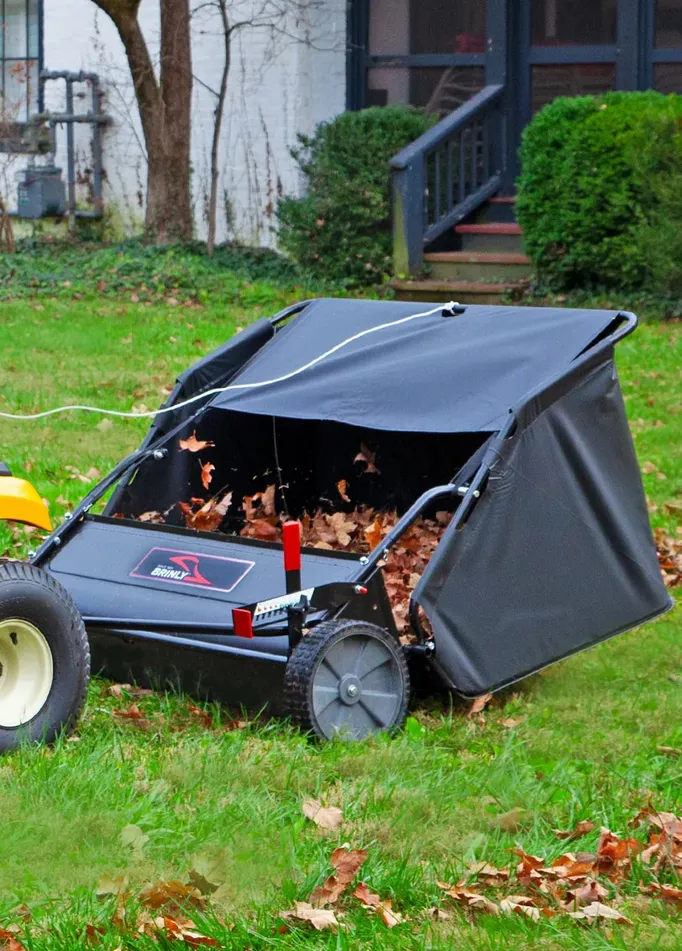
If you manage a multi-acre property with severe clay issues, the Brinly is the ultimate commercial-grade solution. With a massive 42-inch sweeping path and a towering 20-cubic-foot hopper capacity, this machine is built to process massive volumes of heavy debris in a fraction of the time.
Brinly utilizes a highly engineered six-brush system instead of the standard four-brush layout found on cheaper models. This continuous brush contact provides unmatched sweeping efficiency, ensuring that heavy clay cores are lifted on the first pass rather than being dragged forward and crushed into the turf. The Brinly features heavy-duty pneumatic rubber tires with aggressive agricultural tread, completely eliminating the wheel slippage issues that plague lesser machines on damp clay. The high-capacity hamper bag also features a convenient pull-rope system, enabling you to dump a massive load of wet clay plugs directly from your tractor seat without any manual lifting.
How to Integrate Your Sweeper Into a Clay Repair Routine
Purchasing the machine is only half the battle; you must also use it at the correct operational moments to maximize your lawn health. A tow-behind sweeper should be treated as an essential companion tool to your aeration and leveling process.
The ideal sequence for treating a compacted yard begins with a heavy-duty aerator. If you want to explore the best options for pulling those heavy plugs before sweeping them up, check out our complete breakdown of the best tow-behind plug aerators to find a machine that can penetrate tough ground.
Once your aerator has pulled the plugs, allow them to dry in the sun for a few hours. Attempting to sweep up soaking wet, muddy clay plugs will turn your hopper into a heavy paste bucket and clog the brush mechanism. Once the outer layer of the plugs turns light brown and crumbly, hook up your lawn sweeper, adjust the brushes so they sit roughly half an inch above the soil level, and drive at a steady speed of 3 to 4 miles per hour. This speed creates the perfect centrifugal force to throw the heavy cores cleanly into the hamper.
After sweeping the heavy plugs away, your lawn will feature thousands of open, clean holes. This is the absolute best time to apply soil conditioners or compost. If you are plan on leveling out any remaining dips or ruts caused by heavy machinery, read our comprehensive guide on using the best lawn leveling rake to get a smooth, professional finish across your newly cleared yard.
Frequently Asked Questions
Can a lawn sweeper pick up wet clay soil plugs?
It is highly recommended to avoid sweeping completely wet clay plugs. Wet clay is incredibly sticky and heavy. It will coat the brushes, jam the driving gears, and potentially rip the fabric of your collection hopper. Always allow the soil cores to dry out for at least half a day until they become brittle and easy to break before running your sweeper over them.
How fast should I drive when towing a lawn sweeper over clay?
The sweet spot for most residential tractors and riding mowers is between 3 and 5 miles per hour. If you drive too slowly, the brushes will not spin fast enough to lift heavy clay debris into the bag. If you drive too fast, the sweeper wheels will start to bounce on uneven clay surfaces, causing the brushes to skip over large patches of debris.
Will a tow-behind sweeper damage my grass?
No, as long as you set the brush height correctly. The brushes should only skim the very top of the grass canopy or sit just above the soil surface. If you set the height too low, the brushes will scrape against the ground, causing friction that can scalp your turf and prematurely wear down the nylon bristles.
Can I use a lawn sweeper to clear autumn leaves on clay?
Yes. Tow-behind sweepers are excellent for clearing heavy blankets of damp autumn leaves. Removing leaves quickly is vital on clay lawns because a wet layer of leaves will trap moisture on the surface, accelerating fungal growth and inviting moss infestations.
Summary
Investing in one of the best tow-behind lawn sweepers for clay soil yards is one of the smartest upgrades you can make for your property maintenance. Models like the Vevor 26-inch and the Brinly 42-inch offer the reinforced steel frames, high-velocity brush gears, and rugged pneumatic tires required to conquer the unique weight challenges of clay terrain. By integrating a heavy-duty sweeper into your regular core aeration and seasonal cleanup routines, you can effortlessly maintain a clean, breathable, and healthy turf canopy while saving your back from hours of grueling manual labor.