
Transparency Matters: I test tools and seeds to help you mend your lawn. If you buy something through my links, I may earn a commission which helps support this 1,000 sqm experiment at no extra cost to you. Thank you for the support!
If you’ve read my guide on repairing a lawn destroyed by heavy equipment, you know that soil compaction is the silent killer of grass. When heavy machinery (or even years of foot traffic) packs your soil tight, your grass literally suffocates.
The solution? Aeration. But not all aeration is created equal.
In this guide, I’ll break down the battle between Core Aeration vs Spike Aeration, and why one is a “lawn mender” while the other might actually be making your problem worse.
What is Lawn Aeration?
Aeration is the process of creating holes in your lawn to allow air, water, and nutrients to reach the roots. In a 1,000 sqm experiment like mine, where clay soil is the main enemy, aeration is the difference between a lush green carpet and a muddy swamp.
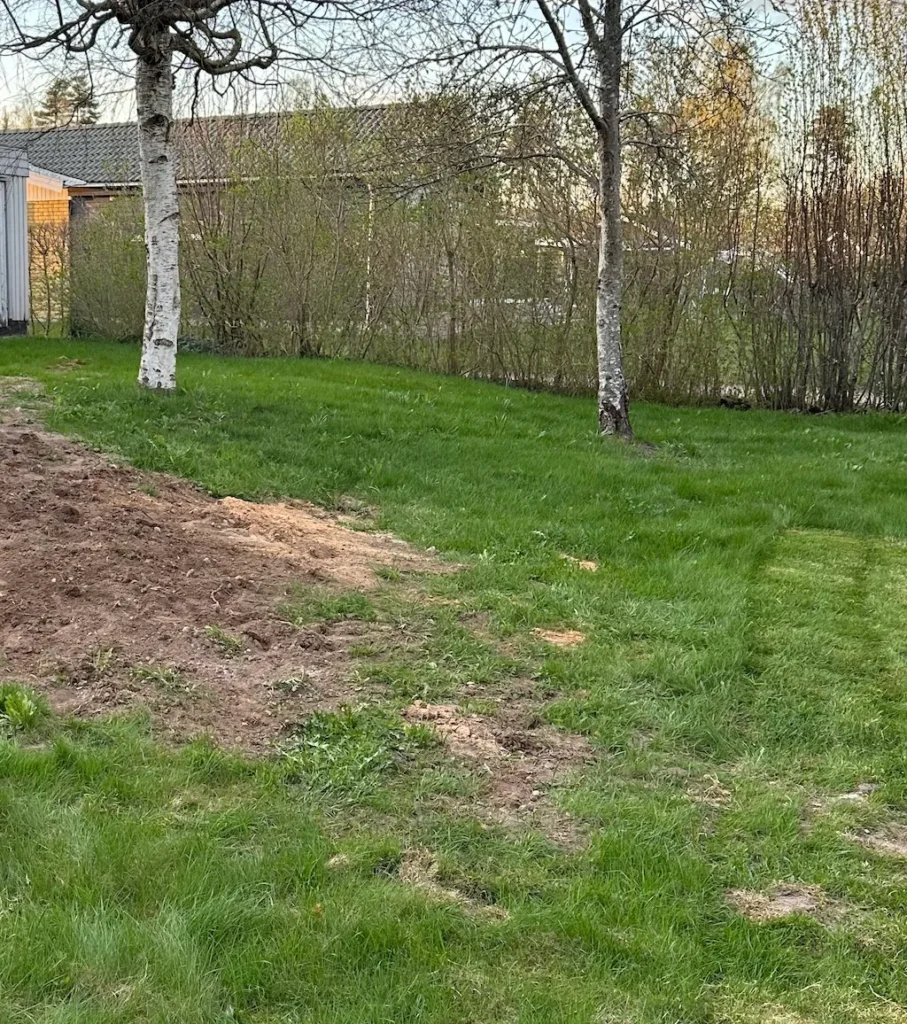
Heavily compacted clay is the ultimate breeding ground for deep-rooted weeds. If your yard is already under attack, read my guide on how to permanently remove dandelions from hard clay before you start aerating.
Spike Aeration: The Quick (But Risky) Fix
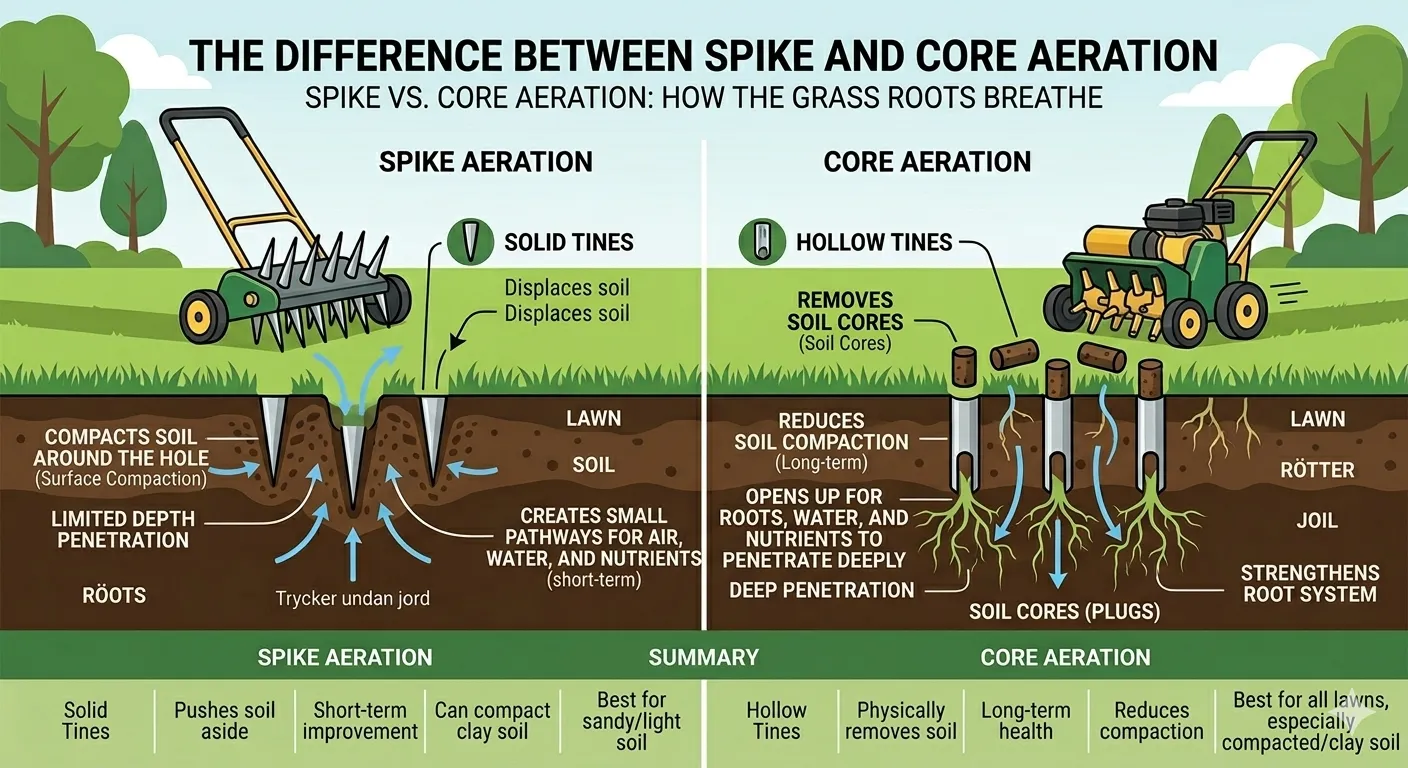
Spike aeration involves using solid tines or forks to poke holes into the ground. You’ve probably seen “aerator shoes” with long spikes on them – that’s spike aeration.
Pros
- Cheap and easy: You can buy a manual pitchfork or cheap tow-behind spikes.
- No cleanup: It doesn’t leave “soil plugs” on your lawn.
Cons
- The “Side-Effect”: Here’s the problem. When you push a solid spike into clay, you aren’t removing soil; you’re just pushing it to the sides. This can actually increase compaction around the hole.
- Shallow: It rarely goes deep enough to help with severe damage from heavy machinery.
Core Aeration: The Professional’s Choice
Core aeration (also called plug aeration) uses hollow tines to pull out “plugs” or “cores” of soil and thatch from the ground.
Pros
- True Relief: By removing soil, you create actual physical space for the remaining soil to expand into. This is the only way to truly fix subsoil compaction.
- Deeper Penetration: Most machines reach 5–10 cm deep, which is where the roots need help.
- Natural Fertilizer: As the plugs break down on the surface, they return beneficial microbes to the top of your lawn.
Cons
- The Mess: Your lawn will look like a flock of geese had a party there for a week or two.
- Equipment: Manual core aerators are hard work, and motorized ones are heavy to rent.
The Comparison: Core vs. Spike
| Feature | Spike Aeration | Core Aeration |
|---|---|---|
| Action | Pushes soil aside | Removes soil plugs |
| Best For | Light maintenance | Heavy compaction / Clay |
| Compaction Relief | Minimal (can worsen clay) | High / Effective |
| Effort | Low | High (but worth it) |
My Verdict: Why I Chose Core Aeration for My 1,000 SQM Project
When I stood in the middle of my yard after the geothermal drilling was done, the ground was like concrete. I tested a spike aerator, and it barely scratched the surface.
For any serious lawn recovery, Core Aeration is the clear winner. If you have clay soil or have had heavy equipment on your lawn, don’t waste your time with spikes. You need to get that soil out to let the air in.
Step-by-Step: How to Aerate Like a Pro
- Check Soil Moisture: The soil should be moist but not muddy. If it’s too dry, the aerator won’t go in. If it’s too wet, you’ll just create a mess.
- Mark Your Lines: Mark any sprinkler heads or cables (like my robot mower wire!) so you don’t destroy them.
- The “Double Pass”: For heavily compacted areas, go over the lawn twice – the second time in a perpendicular direction to the first.
- Overseed Immediately: This is the “Golden Window.” Drop your grass seed right after aerating. The seeds will fall into the holes, giving them perfect “seed-to-soil” contact.
Where to find a Core Aerator?
For my 1,000 sqm project, I realized that buying a heavy-duty tow-behind aerator was overkill. I recommend renting a motorized unit for the initial heavy lifting.
If you have a smaller lawn or specific compacted patches, you don’t need to rent a big machine. A solid hand tool will do the job. I’ve reviewed and tested the best manual core aerators that can actually handle heavy clay without clogging or if you prefer I’ve done an head-to-head comparison of the Yard Butler vs. Walensee aerators to see which one actually survives heavy clay.
How to Use a Manual Core Aerator
Using a manual tool on a large lawn requires a bit of technique. I found this video extremely helpful to see the rhythm and pressure needed to get deep, clean plugs without breaking your back. It’s the exact method I’m planning for the high-traffic areas around my patio.
Mending the Soil is Only Phase One
Aeration is a great start, but it’s only one piece of the puzzle. If you’re dealing with deep ruts, make sure to check out my full Lawn Recovery Guide to see how to level the ground after you’ve let it breathe.
Once you’ve pulled those cores, the best way to improve your clay is to fill the holes with organic matter. Save your back and use one of the best peat moss spreaders to get an even layer.
Once your soil is opened up by core aeration, you have a golden window of opportunity for overseeding. Dropping seed directly into those holes ensures maximum root depth. Make sure to check out my guide on the best grass seed for clay soil so you don’t waste money on a blend that can’t handle heavy dirt.
Frequently Asked Questions
Is core aeration or spike aeration better for heavy clay soil?
Core aeration is significantly better and highly recommended for heavy clay soil. While spike aerators simply push the soil aside to make a hole—which actually increases compaction around the opening—core aerators physically remove a plug of soil. Removing these plugs creates true empty space, allowing the dense clay to relax, breathe, and absorb water and nutrients.
Can spike aeration actually damage a clay lawn?
Yes, it can make compaction worse. Because clay particles are so fine, pressing a solid spike into the ground compresses the soil tightly around the walls of the hole, creating a “masonry effect.” This makes it even harder for grass roots to penetrate. Spike aerators are acceptable for loose, sandy soils, but they should be avoided on hard clay.
How often should you core aerate a lawn with compacted clay?
For severely compacted clay lawns, you should core aerate twice a year—once in the spring and once in the early fall—until the soil structure begins to improve. Once your lawn becomes thick and the soil softens up, reducing it to once a year in the fall (right before your annual overseeding) is sufficient to maintain health.
What should I do with the dirt plugs left on the lawn after core aerating?
You should always leave the soil plugs on the lawn to break down naturally, which usually takes 1 to 2 weeks depending on rainfall. They contain beneficial soil microbes and nutrients that wash back into the root zone. To get the absolute best results from your aeration, immediately spread a thin layer of organic compost or peat moss over the lawn so it can fill the open holes before they close up.