
Disclaimer: When you buy through links on our site, we may earn an affiliate commission at no extra cost to you.
If you have a large yard sitting on a foundation of heavy clay, you already know that core aeration is mandatory to keep the grass alive. Over time, walking on the lawn or mowing it packs the clay particles together until they are as hard as concrete, suffocating the roots.
For smaller yards, a manual tool is fine. But when you are dealing with a half-acre or more of compacted dirt, using a handheld step-aerator is an absolute nightmare and you might want to consider tow-behind plug aerators instead.
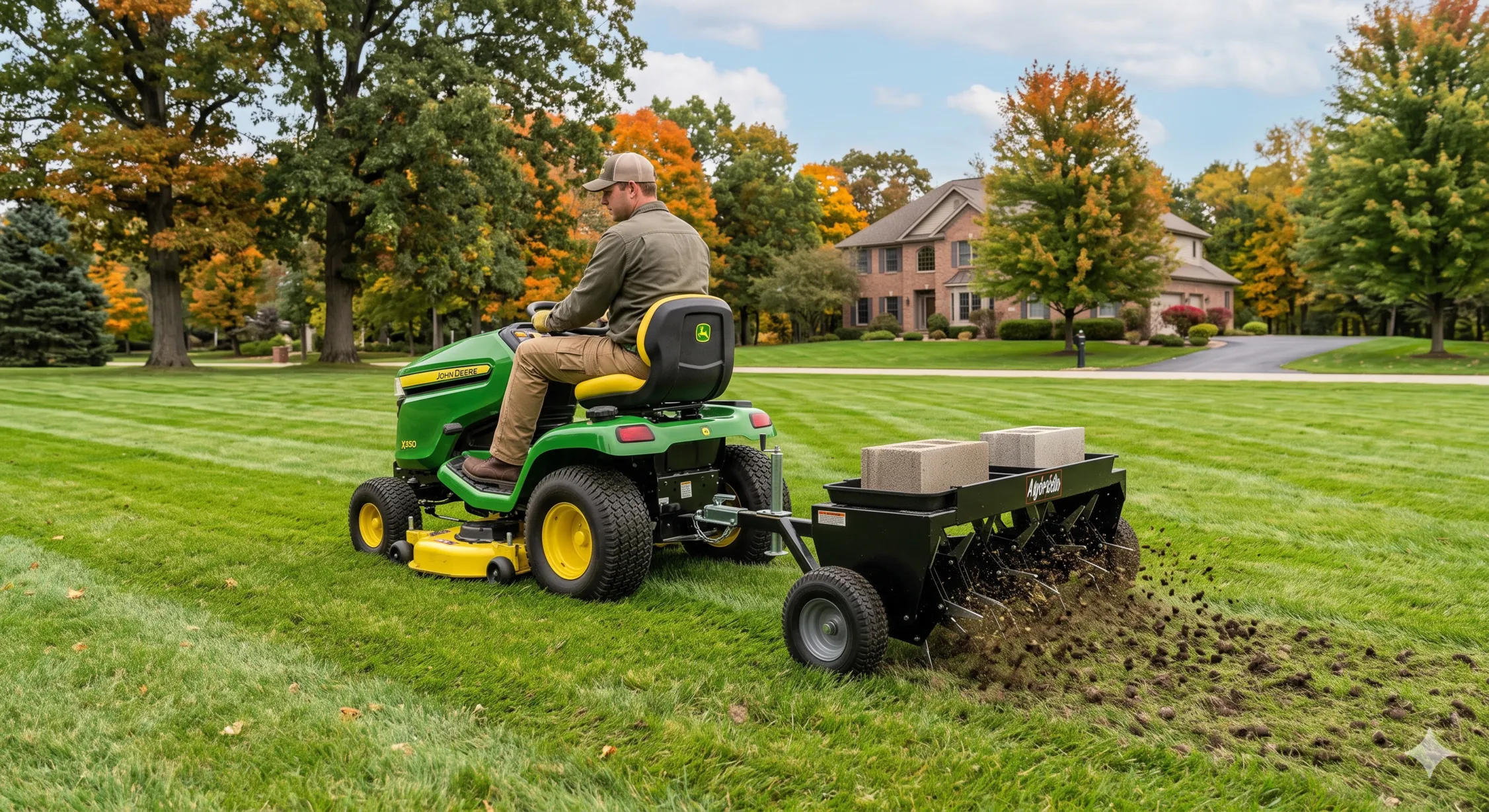
Naturally, you start looking into tow-behind plug aerators that attach directly to your riding mower or ATV. But heavy clay is notoriously stubborn, leaving many homeowners wondering: Do tow-behind plug aerators actually work on hard clay soil, or will they just bounce across the surface?
The short answer is yes, they absolutely work, but only if you buy the right type of machine and use a specific setup strategy. Here is everything you need to know about using pull-behind aerators on heavy clay.
The Core Challenge: Spike vs. Plug on Clay
Before looking at specific models, there is one golden rule you must follow: Never buy a tow-behind spike aerator for clay soil.
Spike aerators use solid, star-shaped wheels that poke narrow holes into the ground. On loose, sandy soil, this is fine. But on heavy clay, a spike aerator actually causes more compaction. As the solid metal spike forces its way into the dirt, it punches the surrounding clay particles tighter together along the walls of the hole, creating a microscopic ring of brick-like soil.
Instead, you must use a plug aerator (also called a core aerator). These machines utilize hollow metal spoons or tines that slice into the earth, scoop out a cylinder of dirt (a “plug”), and deposit it on top of the lawn. This physically removes mass from the ground, giving the surrounding clay room to expand, breathe, and absorb water.
If you are still on the fence about which style to choose, take a look at our detailed breakdown of core aeration vs spike aeration to see the science behind it.
The Secret to Success: The Weight Tray
If you hook a standard tow-behind plug aerator to your tractor and drive across dry clay, you will be deeply disappointed. The tines will barely scratch the surface because the machine itself isn’t heavy enough to slice through a baked clay crust.
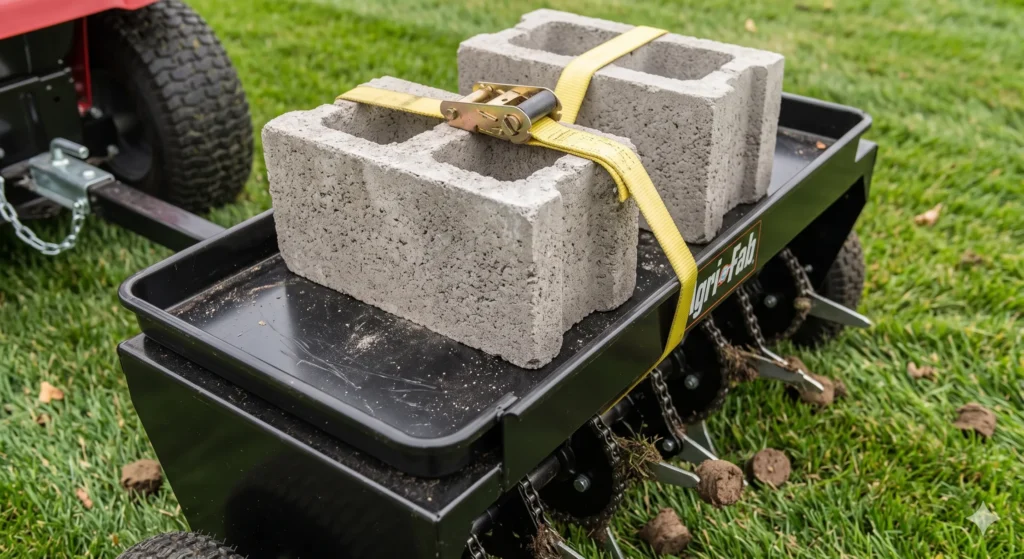
To make a pull-behind aerator work effectively on clay, you must utilize the built-in weight tray.
High-quality tow-behind units feature a flat steel tray positioned directly above the rotating tines. You need to fill this tray with heavy objects to force the hollow spoons deep into the earth.
- What to use: Standard concrete cinder blocks (which weigh about 28–35 lbs each) or plastic water jugs are ideal.
- How much weight: For a standard 42-inch wide aerator on heavy clay, you typically need to add 100 to 150 pounds of extra weight to achieve the proper 2-to-3-inch plug depth. Make sure your unit features a heavy-duty steel frame that won’t bow or bend under this kind of load.
Best Tow-Behind Plug Aerators for Clay Soil
When looking on Amazon for a machine capable of handling the brutal resistance of compressed clay, these are the two industry standards that gardeners trust:
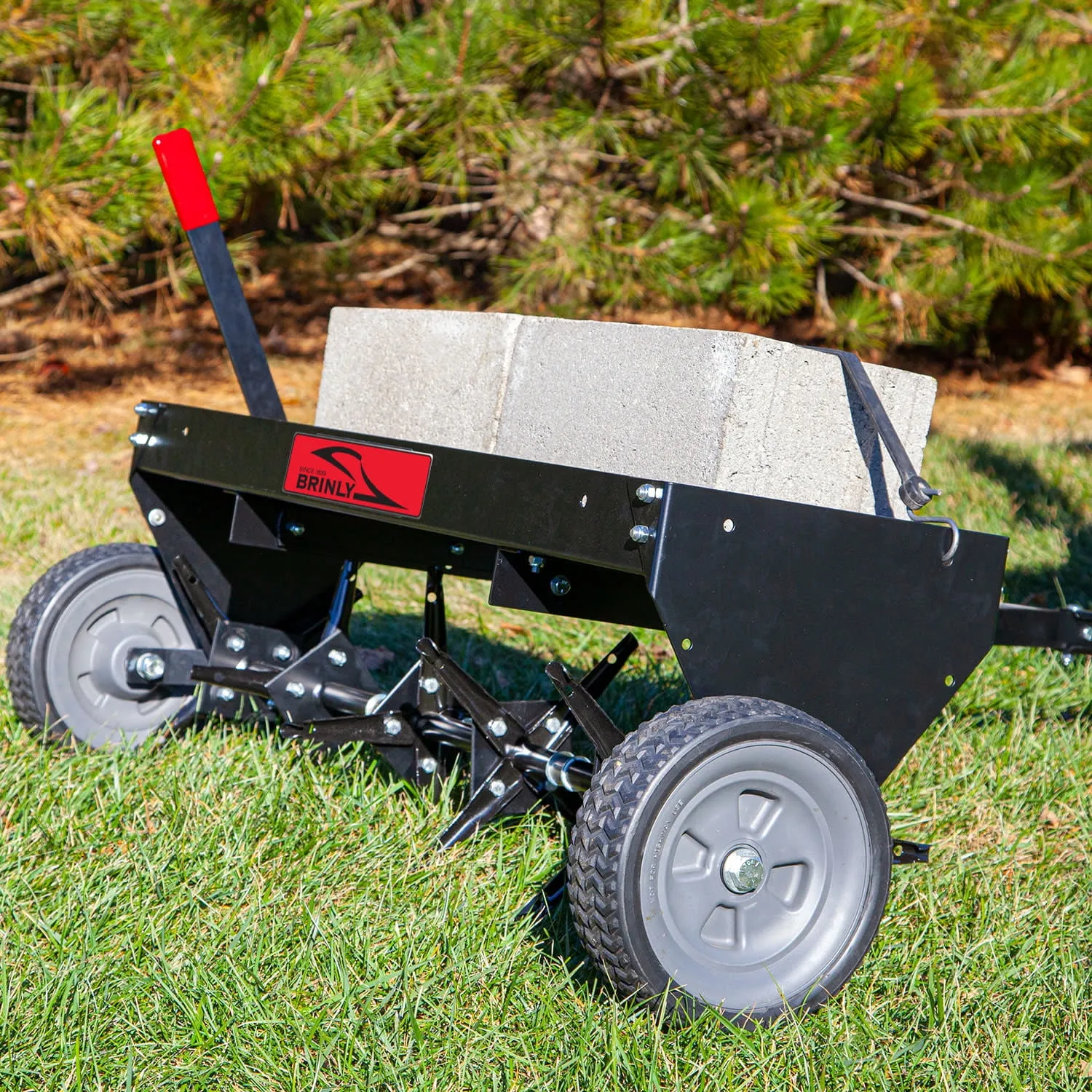
Brinly-Hardy is famous for building commercial-grade lawn tractor attachments, and the PA-42BH-A is built like a tank.
This 42-inch model features heat-treated, 16-gauge steel plugging spoons that are specifically designed to resist snapping when hitting hard ground. The heavy-duty steel weight tray can hold up to 150 lbs, allowing you to pile on the concrete blocks needed to puncture dense earth. It also features a single transport lever accessible right from your tractor seat so you can raise the tines when driving across driveways or sidewalks.
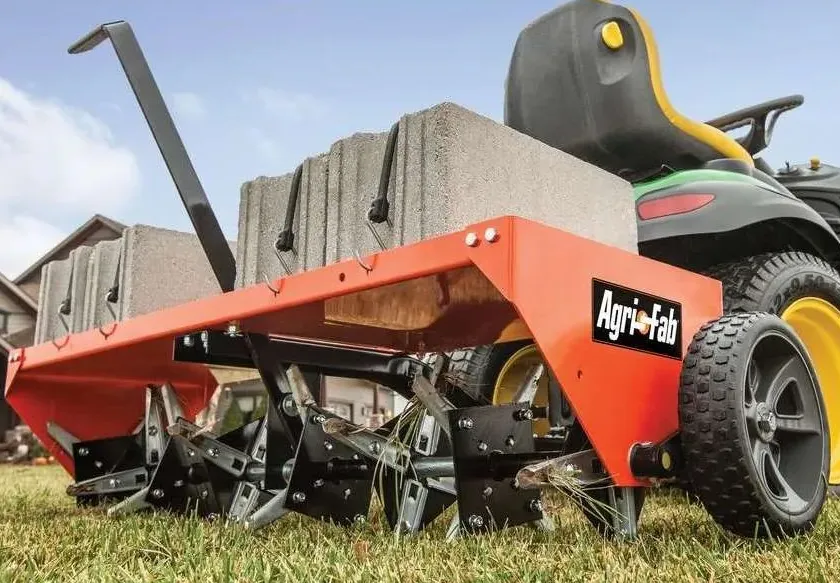
If you have an exceptionally large property, the wider 48-inch footprint of the Agri-Fab 45-0299 will cut your working time down significantly.
It packs 32 galvanized knives that resist rust and wear from abrasive clay particles. It boasts an impressive 175-lb capacity on the weight tray, meaning you can add maximum downward force to cut through severe summer compaction.
Crucial Timing Tips for Clay Aeration
Even with 150 pounds of bricks strapped to a heavy-duty Brinly unit, your success ultimately depends on soil moisture.
- Never aerate bone-dry clay: If your yard has baked in the July sun for weeks, the soil will act like stone. You risk bending the metal spoons or snapping the hitch of your mower.
- Never aerate soaking wet clay: If you pull a heavy machine across muddy clay, the tines will clog up instantly, turning into smooth metal wheels that smear the surface, destroying your soil structure.
- The Sweet Spot: Aerate 24 to 48 hours after a moderate rainstorm, or water the yard heavily with a sprinkler the day before. The clay should feel soft enough to push a screwdriver easily into the turf, but not muddy enough to leave wet sludge on your boots.
Once your soil is perfectly primed and open, it creates the ideal window to fix underlying damage. If your turf is heavily compressed from years of neglect, consider applying a treatment or reading our guide on how to fix compacted clay soil lawn right after pulling your plugs.
Summary
Do tow-behind plug aerators work on heavy clay? Yes, they are an absolute lifesaver for larger yards. By investing in a heavy-duty steel unit like the Brinly PA-42BH-A, strapping down 120+ pounds of concrete blocks, and waiting for the perfect moisture window, you can achieve professional-grade core aeration without ever having to step foot off your riding mower.
Once you are done pulling soil cores, cleaning up the mess can be a backbreaking chore. Instead of raking for hours, using one of the best tow-behind lawn sweepers for clay soil yards is the fastest way to scoop up the dirt plugs and leave a clean surface for overseeding.