Fertilizer Options for Clay-Soil Lawns
Published
Updated
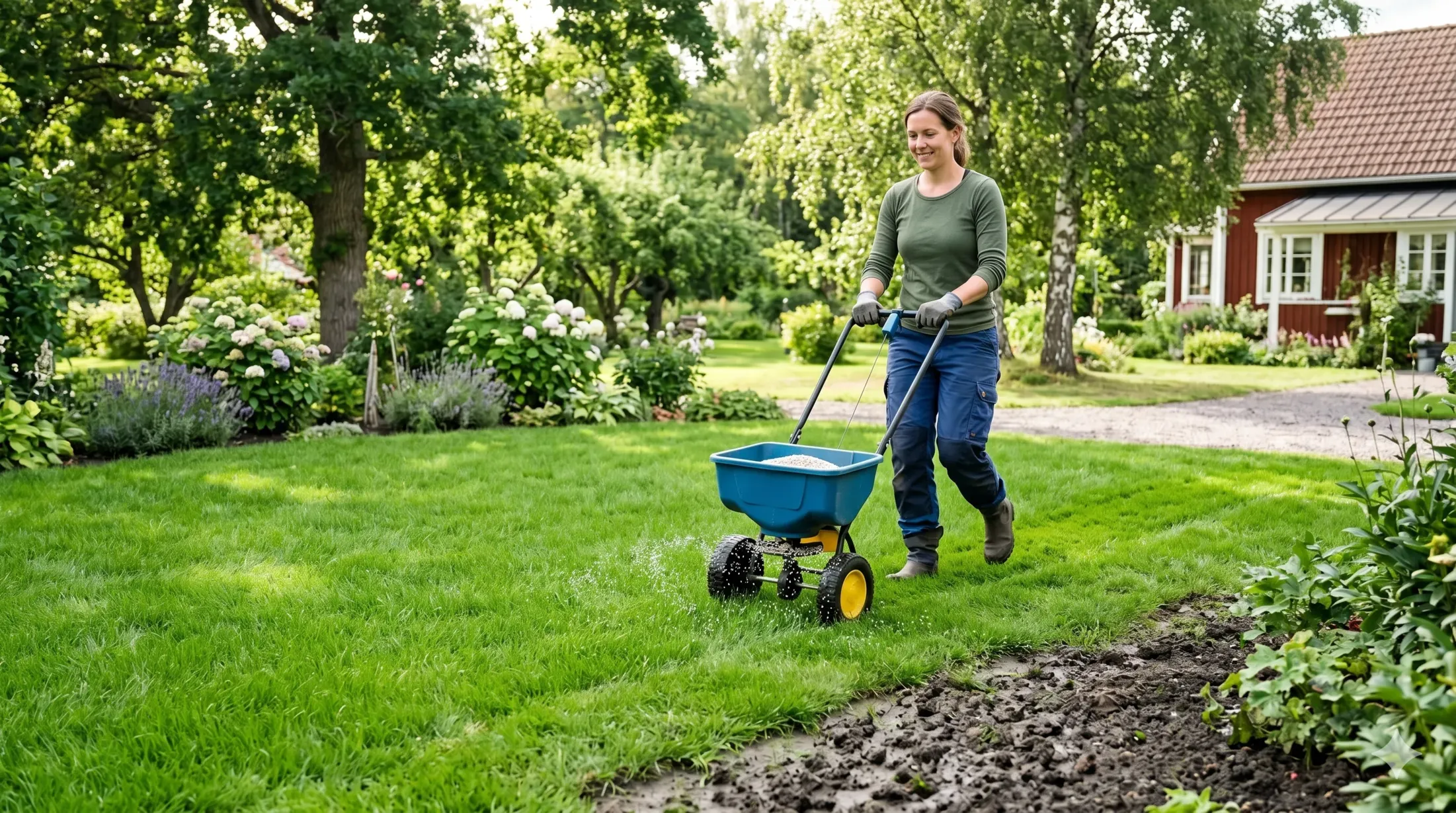
Clay texture affects drainage, compaction, and root-zone air, but it does not reveal which nutrients a lawn lacks. Start with a soil test and identify the turf species before selecting a fertilizer. Fertilizer can correct a nutrient need. It cannot repair poor grading, saturation, shade, or severe compaction.
The three products below solve different problems: slow-release feeding, combined weed control and feeding, or a granular humic amendment. Match the job to the lawn first, then use the label and local fertilizer or pesticide rules to set timing and rate.
The Nutrient Needs of a Clay-Soil Lawn
The three numbers on a fertilizer label give its percentages of nitrogen, phosphate, and potash. A laboratory soil test can estimate texture, pH, organic matter, phosphorus, and potassium and provide amendment recommendations.
- Nitrogen: Turf species and maintenance goals help determine how much nitrogen is appropriate. More is not necessarily better, and applications should be made while the grass can use the nutrient.
- Phosphorus and potassium: Apply these according to soil-test results and local rules rather than inferring nutrient levels from clay texture.
- Physical soil problems: Compaction and excess moisture can limit roots even when nutrients are adequate. If the lawn is firm or drains poorly, diagnose that condition separately. The guide to fixing a compacted clay-soil lawn covers those steps.
Fertilizer and Amendment Options
Milorganite 6-4-0
Milorganite makes the most sense when the plan calls for slow-release nitrogen together with phosphate and iron. Its 6-4-0 analysis makes those inputs easy to identify. Confirm the phosphorus need and local restrictions before applying it.
Scotts Turf Builder Triple Action
Scotts Triple Action is the most efficient fit when one application needs to feed compatible turf, control listed broadleaf weeds, and prevent listed grassy weeds. That combination is useful only when all three jobs and the application window match the current label.
The Andersons Humic DG
Humic DG is the focused add-on for a reader whose soil-management plan calls for a granular humic amendment. It contains 70% humic content and is watered in after application. It does not supply a complete fertilizer program or replace the physical work needed for compaction or drainage.
When to Fertilize a Clay-Soil Lawn
The right schedule depends more on grass species, climate, growth, and product label than on soil texture alone. Avoid applying fertilizer to saturated ground, dormant turf, frozen soil, or before weather likely to carry granules off the lawn.
Early Spring
Do not fertilize solely because the first warm days have arrived. For an established lawn, wait for species-appropriate active growth and follow the soil-test recommendation. Combination herbicide-and-fertilizer products have narrower timing and turf-species restrictions than ordinary fertilizer.
If you are establishing turf, use the seed label and local extension timing rather than a generic spring date. The guide to grass-seed establishment in clay soil explains the other conditions that affect germination.
Late Spring and Summer
A late-spring application may be part of some cool-season lawn programs, while warm-season grasses have different active-growth windows. Avoid pushing growth during heat or drought dormancy. Keep granules off pavement and water them in only as the product label directs. The summer watering guide covers moisture management.
Late Summer and Fall
Late-summer or fall feeding is common for cool-season turf, but it is not a universal once-a-year prescription. Match the timing and nitrogen rate to the species, local climate, and soil-test recommendation. Warm-season lawns generally should not receive growth-promoting nitrogen as dormancy approaches.
Aeration and overseeding can be coordinated with an appropriate growing window, but fertilizer does not need to be dropped into aeration holes to work. See the guide to grass seed for clay-soil lawns before choosing a seed mix.
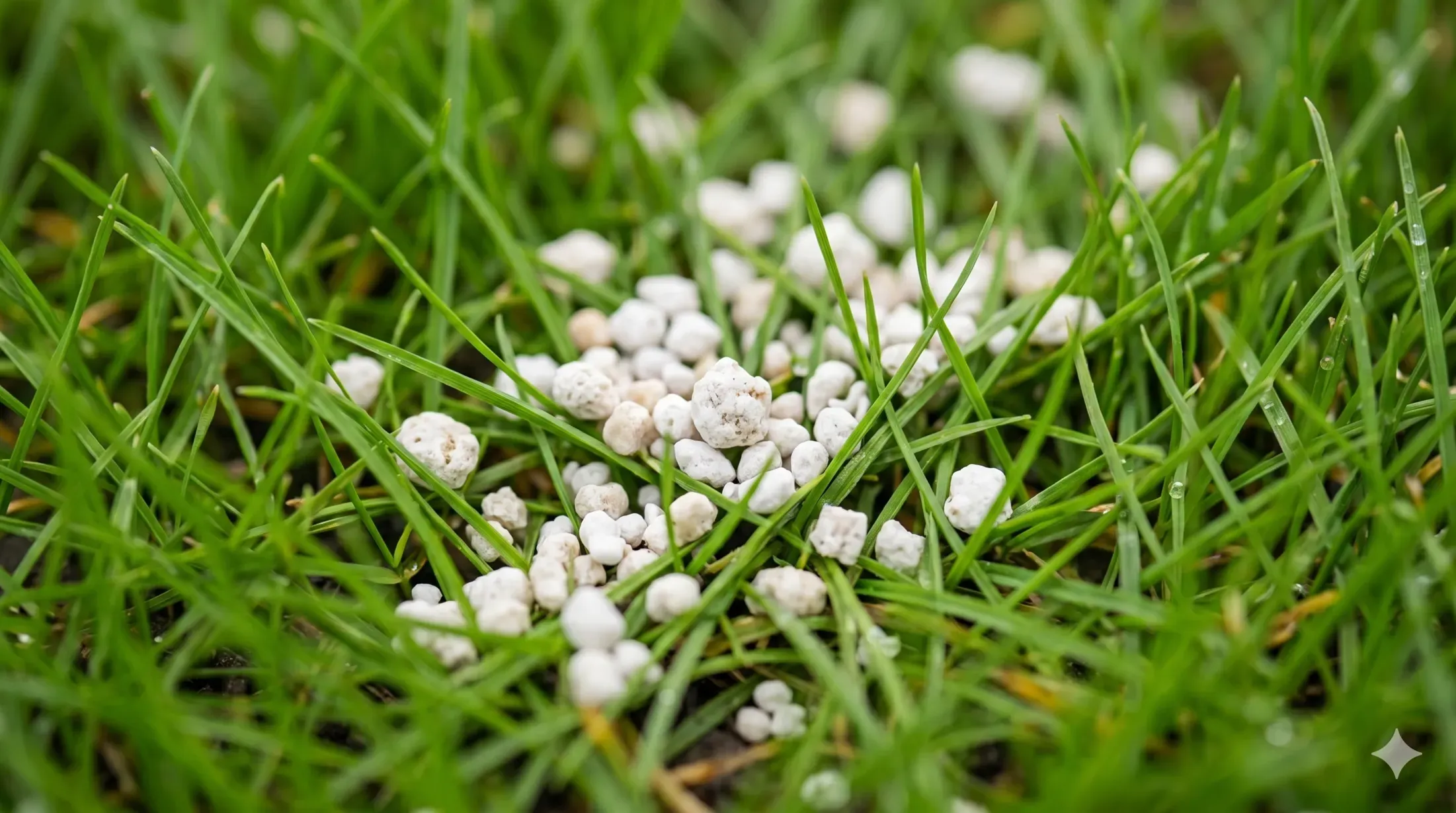
Summary
Choose Milorganite when a soil-tested plan calls for its slow-release 6-4-0 nutrient profile. Choose Scotts Triple Action only when compatible turf needs all three labeled jobs in the same application. Choose Humic DG when a granular humic amendment fits the soil plan. Correct drainage, saturation, and compaction separately.