How to Water a Clay Lawn in the Summer (Without Drowning It)
Published
Updated
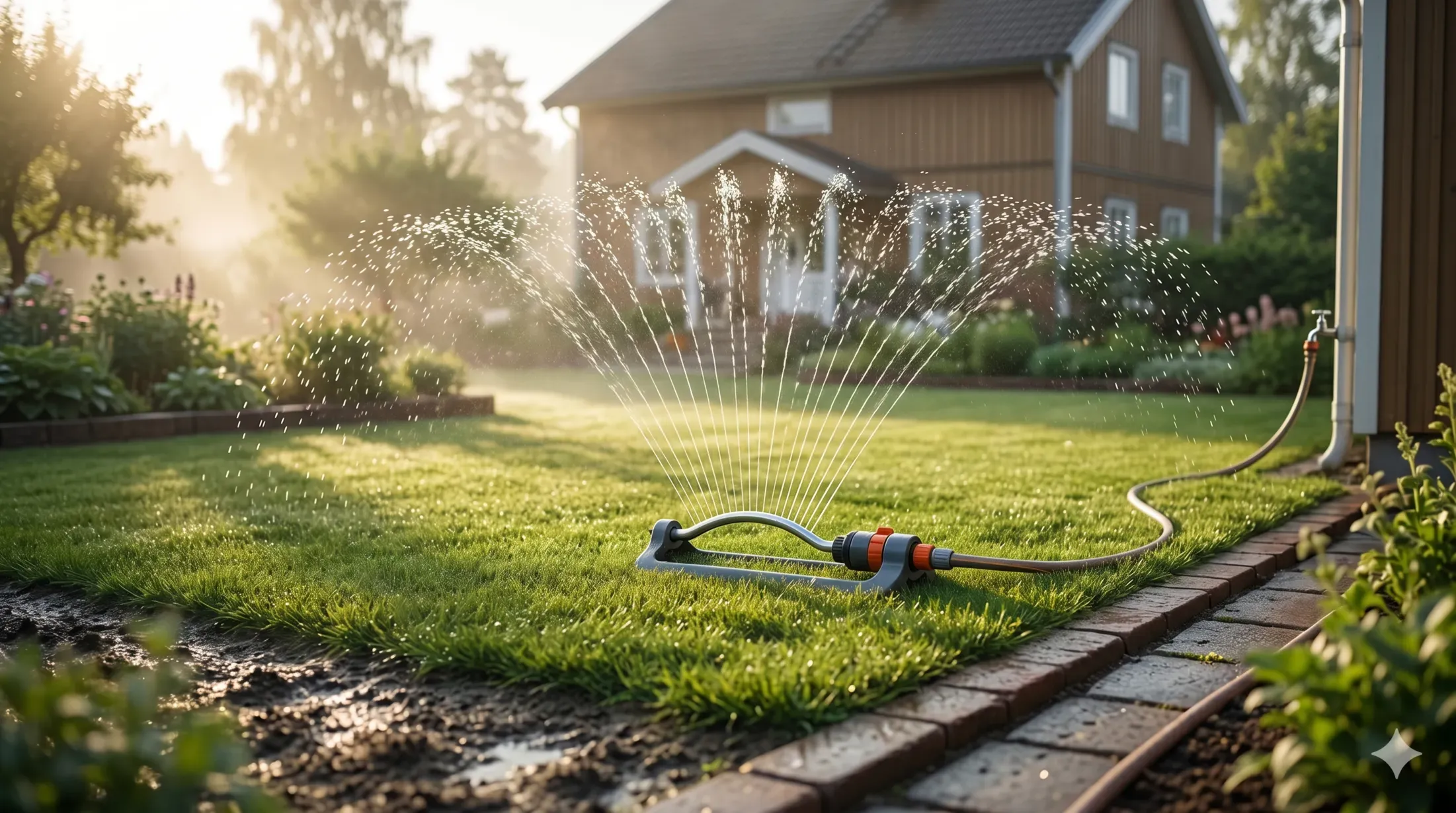
Heavy clay can accept water slowly, so one long sprinkler run may produce runoff or puddles before enough moisture reaches the active root zone. Short watering cycles with soaking breaks give the surface time to absorb water while helping you avoid constant shallow watering.
The “Cycle-and-Soak” Method
Because clay soil has tightly packed particles, water can enter the surface slowly.
If a sprinkler applies water faster than the soil can absorb it, runoff can occur. A “Cycle-and-Soak” approach breaks the watering into shorter sessions.
Instead of watering for one long continuous block, you split your watering time into multiple shorter cycles with breaks in between. Here is how to do it:
- Cycle 1: Run the sprinklers only until the first signs of puddling or runoff, then turn them off.
- Soak: Pause long enough for the surface water to enter the soil. The interval depends on slope, compaction, sprinkler rate, and existing moisture.
- Cycle 2: Run another short cycle, stopping again if water begins to move off the target area.
- Additional cycles: Repeat only as needed to reach the intended depth without runoff.
Breaking the watering into cycles can reduce surface runoff and give the soil time to absorb water.
Deep watering may work better when the lawn is also protected from rapid surface drying. Adjusting mowing habits can complement an irrigation routine. Leaving the turf taller can shade the soil. See summer mowing guidance.
Deep and Infrequent Watering
Frequent, shallow watering can encourage roots to remain near the surface, where conditions may change quickly during hot weather.
Instead, aim to water deeply but infrequently.
Water needs vary with grass type, weather, soil conditions, and local restrictions. Measuring rainfall and sprinkler output can help you adjust the schedule rather than relying on a fixed routine.
If the grass is turning yellow, check soil moisture before adding more water. Our yellowing lawn guide helps you work through possible causes before choosing a treatment.
How to Measure Sprinkler Output
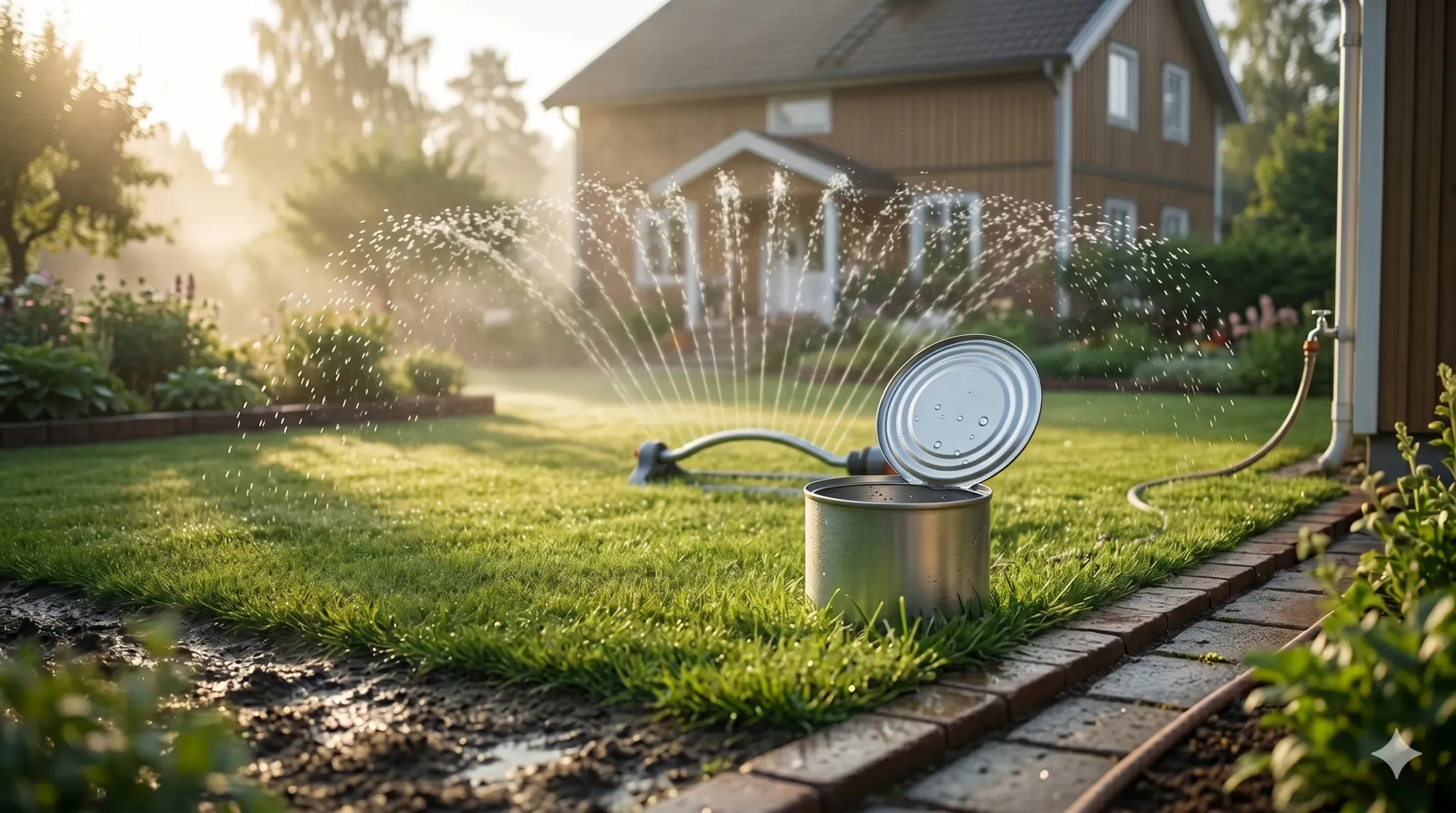
Put several straight-sided cans or rain gauges around the watering area, run one complete cycle-and-soak session, and measure the collected depth. The variation between containers also shows whether coverage is uneven. Use those measurements with local guidance, rainfall, and the lawn’s response instead of assuming one weekly target fits every site.
If moving and storing a long sprinkler hose is awkward, our hose reel comparison covers capacity, mounting, and manual versus automatic winding.
The Best Time of Day to Water
Early morning is often a practical time to water, before daytime heat increases evaporation.
- Why early morning? Cooler temperatures can reduce evaporation and give water time to enter the soil before midday heat.
- Why not evening? Extended leaf wetness may contribute to disease pressure in some conditions, so consider how quickly the lawn dries overnight.
Watch Out for Cracks and Compaction
If deep fissures are opening in the lawn, rehydrate the clay gradually instead of flooding the surface. Our guide to fixing clay-soil lawn cracks covers the repair process.
Severe summer crusting may be worsened by compaction beneath the surface. If the lawn remains hard after gentle watering, see how to address compacted clay soil.
Summary
For a clay lawn, less frequent, deeper watering may be more useful than repeated shallow watering. Adjust the cycle-and-soak schedule to the lawn’s response, local weather, and any watering restrictions.