
Disclaimer: When you buy through links on our site, we may earn an affiliate commission at no extra cost to you.
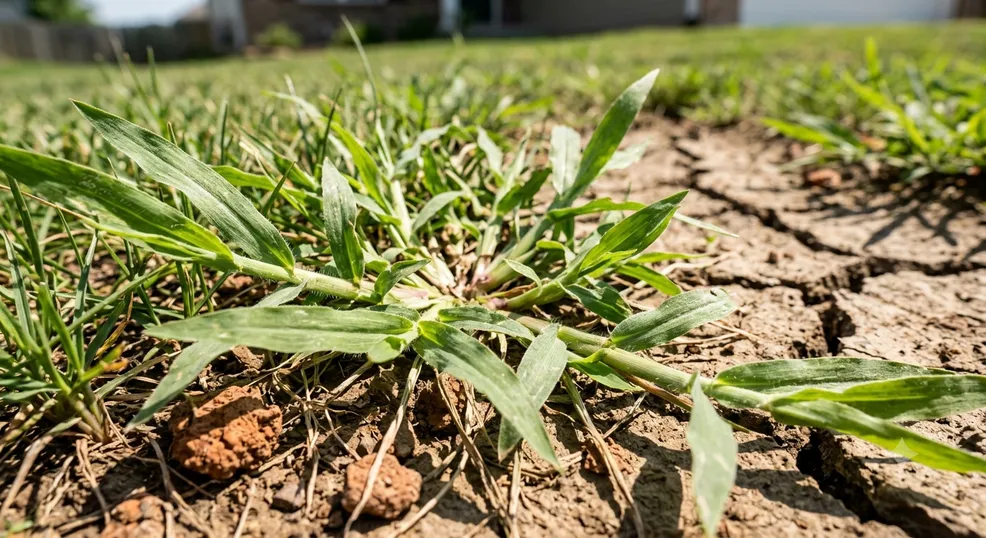
Summer brings out the absolute worst characteristics of heavy clay soil, and opportunistic weeds are always ready to take advantage of the situation. As the hot sun bakes your yard into a hard crust, your regular turfgrass begins to stress, slow its growth, and enter a defensive state. This is exactly when crabgrass strikes. This aggressive, coarse summer annual thrives in conditions that would easily kill desirable turf grass varieties. If your property features a dense clay foundation, you are likely fighting a losing battle against these sprawling patches every single year. Knowing exactly how to get rid of crabgrass in a clay soil lawn requires a strategic approach that combines timely chemical prevention with aggressive physical soil improvements.
Leaving crabgrass unchecked will ruin your yard before the autumn frost arrives. A single crabgrass plant can produce up to 150,000 seeds during a single summer season, ensuring that your weed problem multiplies exponentially next year. In this comprehensive, long-form guide, we will dive deep into the unique biological connection between clay soil and crabgrass outbreaks. We will provide a step-by-step blueprint for both spring prevention and summer eradication, helping you eliminate this stubborn weed and restore your green spaces.
The Chemical Connection: Why Crabgrass Loves Hard Clay
To defeat this invasive weed, you must understand why it finds your clay yard so incredibly attractive. Crabgrass has evolved to thrive in low-oxygen, highly compacted environments. While fine turfgrasses like Kentucky Bluegrass or Tall Fescue require loose, airy soil with plenty of pore space to expand their roots, crabgrass features an incredibly aggressive, opportunistic root system that can force its way into microscopic cracks in compressed earth.
When your clay lawn undergoes summer heat stress, it naturally begins to shrink and crack. These deep fissures create the perfect micro-environment for dormant crabgrass fronds. The seeds fall into the open cracks, where they are protected from birds and surface wind. As soon as a summer rainstorm hits, the water channels directly down into these cracks, triggering rapid germination.
Furthermore, because clay holds onto surface moisture while starving the lower root zones of oxygen, compacted lawns often develop thin patches and bare spots. Crabgrass is a sun-loving plant; it requires direct solar radiation on the soil surface to germinate. A thin, stressed clay lawn provides the open canopy and bare dirt that crabgrass needs to establish its sprawling, starburst-shaped clusters.
Step 1: Pre-Emergent Prevention (The Spring Blueprint)
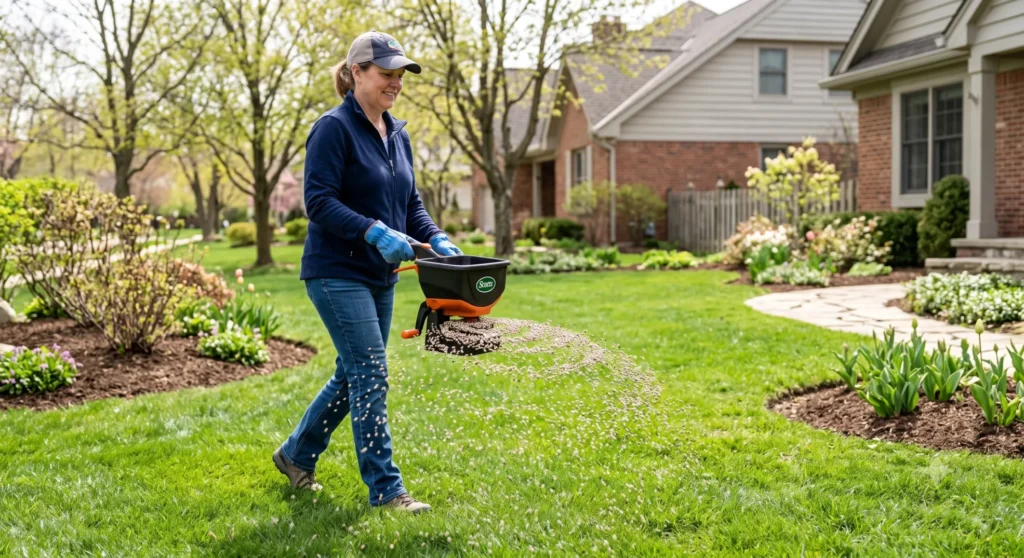
The absolute most effective way to manage a crabgrass infestation on a clay lawn is to stop the seeds from ever growing in the first place. This is accomplished by applying a granular pre-emergent herbicide in early spring.
Pre-emergent products do not kill existing weeds. Instead, they dissolve into the top layer of the soil and create a chemical barrier that stops germinating seeds from sending up their first shoots. On clay soil, applying this barrier correctly requires precise timing and proper product selection.
| 1. Timing | 2. Application | 3. Activation | 4. Result |
|---|---|---|---|
| Early Spring (Soil Temp reaches 55°F) | Apply Pre-Emergent Granular (e.g., Prodiamine or Dithiopyr) | Water Lightly Activates the chemical barrier in top clay layer | Crabgrass Seeds Die Germinate but die instantly upon hitting the barrier |
To achieve maximum control, you must track your local soil temperatures. Crabgrass seeds begin to germinate when the soil temperature hits 55°F at a 4-inch depth for three consecutive days. You must apply your pre-emergent herbicide before the soil reaches this threshold. For most regions, this window opens up right around the time local forsythia bushes display their bright yellow spring blossoms.
When applying pre-emergent to a clay foundation, choose a high-quality granular product containing Prodiamine or Dithiopyr. Runoff is a massive issue with non-porous clay, so make sure to apply the granules right before a light rain, or irrigate the lawn with roughly a quarter-inch of water immediately after spreading to lock the chemical barrier into the top layer of dirt before heavy rain can wash it away.
Step 2: Post-Emergent Eradication (Summer Elimination)
If you missed the spring prevention window and you are already looking at mature, sprawling crabgrass clusters in July or August, pre-emergents will not help. You must shift to post-emergent eradication strategies.
Mechanical Removal for Minor Outbreaks
If you only have a few isolated patches scattered across your yard, manual extraction is the safest and fastest solution. However, trying to yank a mature crabgrass clump out of dry, concrete-like clay by hand will only result in tearing the top leaves off, leaving the robust root system intact to regenerate.
To remove the weed permanently, you must wait until immediately after a heavy rainstorm or deep watering session when the clay is soft and malleable. Use a specialized tool designed to handle dense ground. For a complete look at the best tools for the job, consult our guide on the best weed pullers for hard clay soil to ensure you extract the entire taproot without breaking the tool or injuring your back.
Selective Chemical Sprays for Severe Infestations
When crabgrass has completely overtaken large sections of your yard, manual pulling becomes impractical. You will need to apply a selective post-emergent liquid herbicide spray containing Quinclorac.
Look for a product that specifically lists Quinclorac as the active ingredient. Quinclorac is highly effective at killing crabgrass while leaving standard lawn grasses completely unharmed.
⚠️ Important Summer Temperature Warning: Never spray liquid post-emergent herbicides when daytime temperatures exceed 85°F / 29°C. Doing so will cause severe chemical burn to your already stressed turf grass, creating massive dead spots that will simply open up more space for future weed outbreaks. Spray during the cool evening hours instead.
Step 3: Changing the Soil Environment for Long-Term Defense
Chemical barriers and sprays provide temporary relief, but if you do not alter the underlying soil conditions, the crabgrass will return next summer. To build a permanent defense system, you must make the environment hostile to weeds and hospitable to grass.
The single best way to accomplish this is to eliminate the compaction that crabgrass thrives on. Regular core aeration punctures the hard clay crust, allowing air and water to sink deep into the ground. This process encourages your turfgrass roots to grow thick and deep, creating a dense canopy that naturally blocks sunlight from reaching dormant weed seeds. If you are dealing with a severe infestation that has left behind patches of thick moss in shaded, damp areas of your clay yard, be sure to read our targeted guide on how to get rid of moss in a clay soil lawn to clear out all invading species simultaneously.
Once you have cleared out the weeds and aerated the soil, you must fill those empty spaces with high-quality grass. Over-seeding your clay yard with a resilient grass variety creates a thick mat of turf that leaves no room for crabgrass to establish a foothold next season. For a detailed evaluation of which turf varieties handle heavy ground the best, check out our analysis of the best grass seed for clay soil to choose a variety that can out-compete aggressive weeds naturally.
Frequently Asked Questions
Can I spray vinegar to get rid of crabgrass in clay?
Horticultural vinegar (acetic acid) will kill the top growth of young crabgrass, but it is a non-selective herbicide. This means it will kill any desirable turfgrass it touches as well. Furthermore, vinegar cannot penetrate deep into heavy clay soil to kill the extensive root system of mature crabgrass, meaning the weed will likely grow back from the roots within a few weeks.
Why does crabgrass spread so fast along driveways and sidewalks?
Concrete and asphalt absorb massive amounts of heat from the summer sun, radiating that heat directly into the adjacent clay soil. This high temperature bakes the soil and stresses the regular lawn grass, causing it to die back. Crabgrass loves this extreme heat and quickly invades these bare, baking-hot clay edges along your walkways.
Does mowing high help prevent crabgrass outbreaks?
Yes! Maintaining a high mowing height of 3.5 to 4 inches is one of the best cultural defenses against crabgrass. The tall, dense grass blades cast a thick shadow across the clay soil surface, preventing sunlight from reaching the ground. Without direct sunlight, dormant crabgrass fronds cannot trigger their germination cycle.
Summary
Successfully learning how to get rid of crabgrass in a clay soil lawn requires moving away from reactive spraying toward a proactive, year-round management plan. By applying a granular pre-emergent herbicide barrier in early spring, extracting isolated summer patches using a heavy-duty weed puller when the soil is damp, and committing to long-term core aeration, you can permanently alter your yard’s environment. Breaking up the tight clay structure allows your desirable grass to build a thick, dominant canopy that naturally suffocates crabgrass, ensuring your property stays beautiful, healthy, and weed-free for seasons to come.