
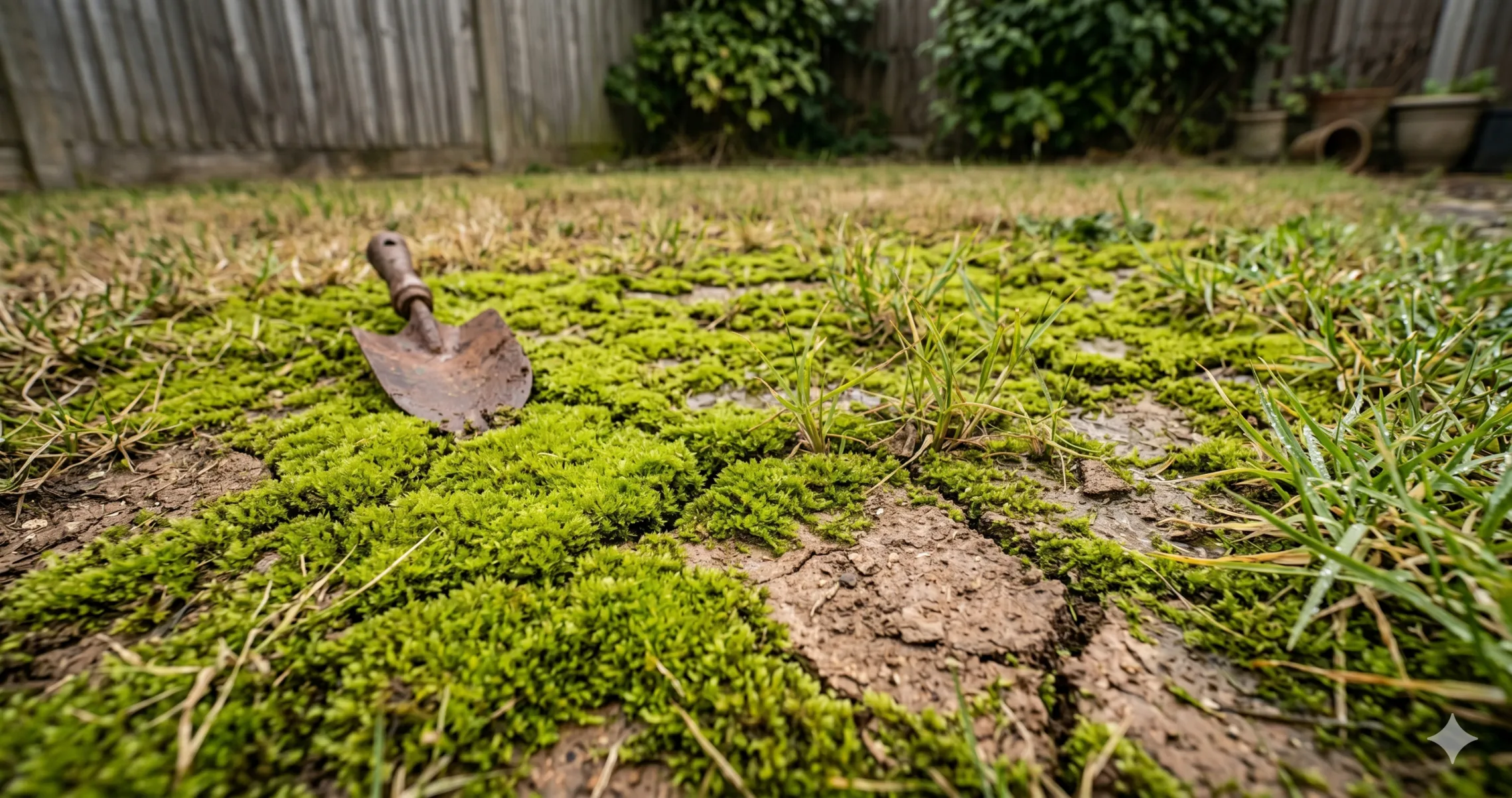
If your lawn looks more like a spongy green carpet from a fairytale than a crisp, thick sports turf, you are likely dealing with a moss invasion. And if your yard is built on a heavy clay foundation, it can feel like an uphill battle.
Many homeowners make the mistake of buying expensive moss killers year after year, only for the moss to return every single spring.
The secret to winning this war is simple: you cannot permanently get rid of moss until you fix the underlying soil conditions that allowed it to thrive in the first place.
Here is everything you need to know about how to eradicate moss from your clay soil lawn for good.
Why Moss Absolutely Loves Clay Soil
Moss doesn’t have traditional roots like grass. Instead, it anchors itself to the surface using tiny hair-like structures. It thrives in conditions where grass struggles to survive. Heavy clay soil provides the perfect storm for moss growth due to three main factors:
- Severe Compaction: Clay particles pack tightly together, cutting off oxygen to grass roots. As the grass suffocates and thins out, moss happily moves into the empty spaces.
- Poor Drainage: Clay holds onto water like a sponge. Moss loves constant, damp moisture and easily outcompetes drowning grass roots in waterlogged soil.
- Low pH and Shade: Clay soils are often naturally slightly acidic and slow to warm up, which moss prefers, especially in shaded areas under trees or fences.
To fix the root cause of this environment, you need to address the structural issues of your dirt. If your ground feels like concrete under your feet, make sure to read our ultimate guide on how to fix compacted clay soil lawn before moving forward.
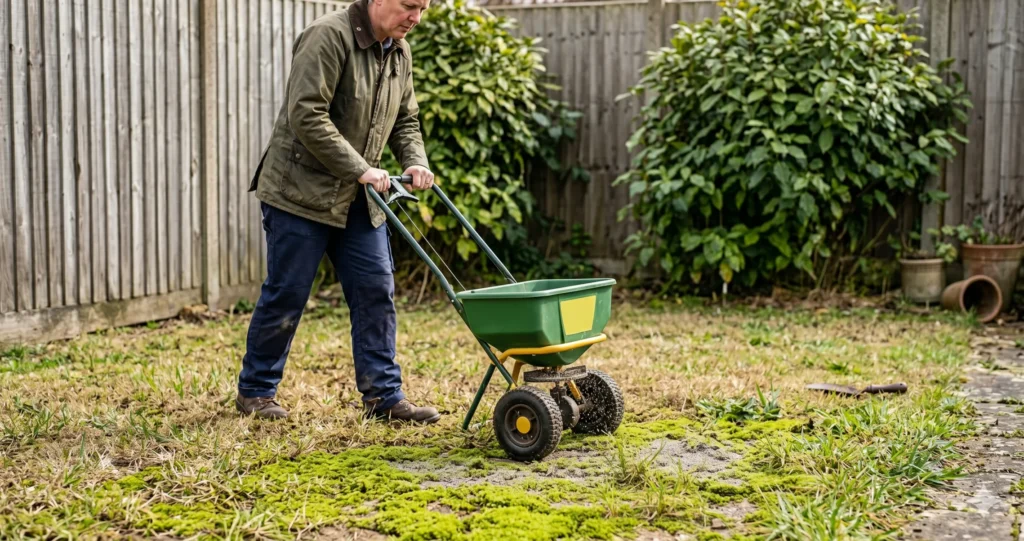
How to Get Rid of Moss in Clay Soil (Step-by-Step)
To clear the moss and give your grass the upper hand, follow this proven four-step restoration process.
Step 1: Kill the Existing Moss
Before you rake or aerate, you want to weaken the moss. The most effective way to do this is by applying an organic or iron-based moss killer (often labeled as Iron Sulfate or Moss Out) in the early spring or autumn. Within days, the iron will turn the moss completely black and dry it out, making it incredibly easy to remove.
Step 2: Dethatch and Scarify (The Scarification Process)
Once the moss is dead and black, it needs to be physically removed from the yard. Using a heavy-duty spring-tine rake or an electric scarifier, vigorously comb through the lawn. You will be shocked by how much black material debris you pull up, leaving bare patches behind. Don’t worry—this clearing is exactly what your grass needs to breathe.
Step 3: Aerate to Fix the Drainage Problem
This is where most homeowners stop, and that is why their moss returns next season. Since clay stays wet and compacted, you must open up the soil structure now.
By pulling physical plugs out of the earth, you break up the compaction and allow water to drain away from the surface, robbing the moss spores of the moisture they need to germinate.
For the best results, make sure you choose a core aerator rather than a solid spike tool. You can read about why this matters in our comparison on core aeration vs spike aeration. If you want a simple, budget-friendly option for a small yard, take a look at our roundup of the best manual core aerator tools on the market.
Step 4: Topdress and Overseed the Bare Patches
Moss will always return if you leave bare dirt exposed. To seal the deal, spread a thin layer of compost across the lawn to fill the aeration holes and improve the soil quality.
Then, aggressively overseed the area with a grass variety that can fight back against heavy soil and shade. We recommend choosing an aggressive, deep-rooting seed mix from our guide on the best grass seed for clay soil to fill in the gaps quickly.
Summary: A Healthy Soil Means No Moss
At the end of the day, moss is just a symptom of a deeper soil issue. By reducing compaction, improving your drainage, and encouraging thick grass growth, you will naturally crowd out the moss without needing to rely on chemical sprays year after year. Keep your clay soil loose, and your lawn will take care of the rest!