
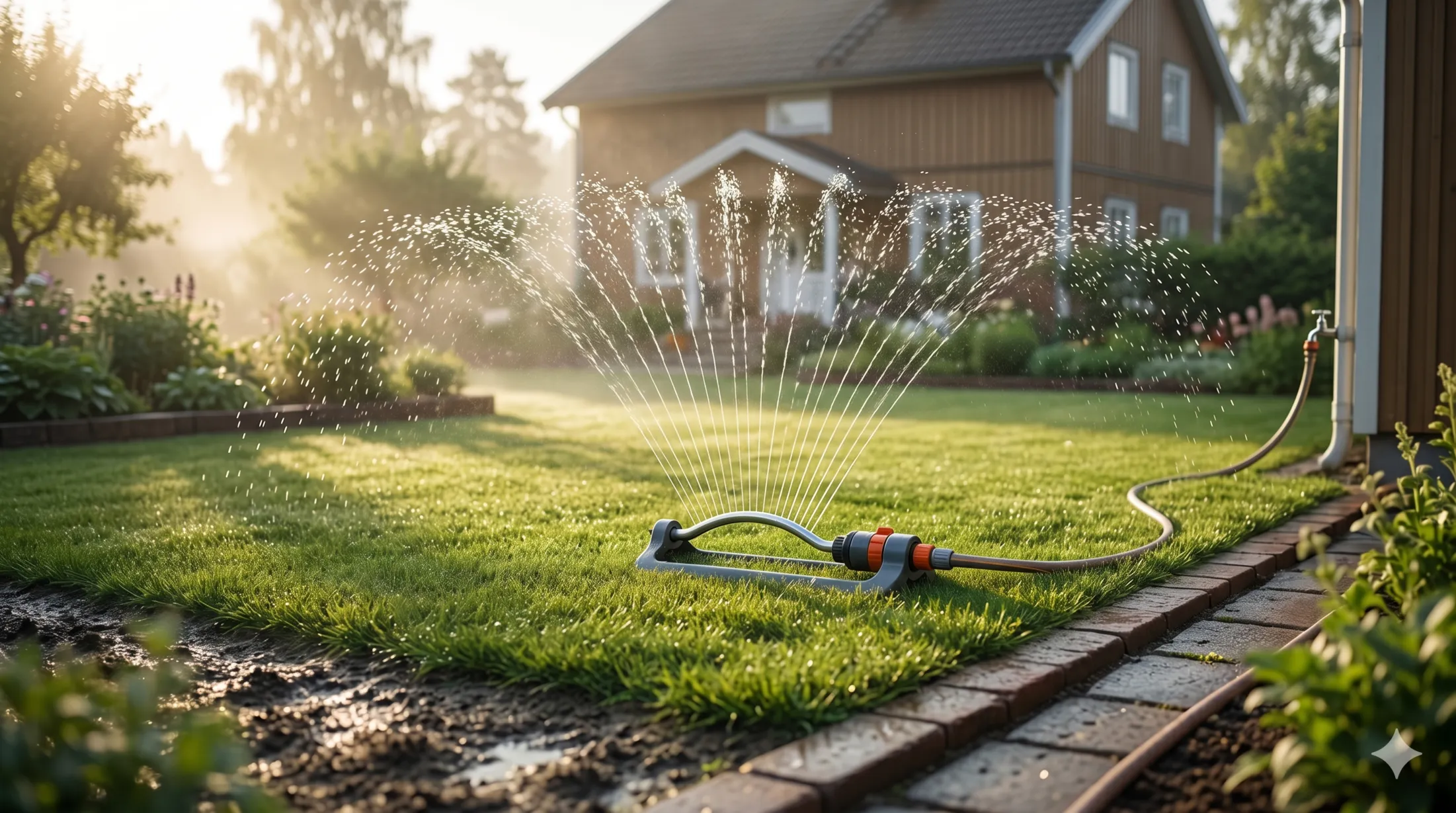
When summer temperatures soar, keeping your lawn green and healthy becomes a top priority. But if your yard is built on a heavy clay foundation, traditional watering advice can actually do more harm than good. In this article, you’ll learn how to water a clay lawn the right way.
Clay soil is incredibly stubborn. When it dries out in the summer heat, it bakes into a hard, brick-like crust that repels water. If you turn your sprinklers on high for an hour, the water will simply run off into the street or pool into muddy puddles, leaving the grass roots bone dry beneath the surface.
To keep your turf thriving without drowning the roots or wasting water, you need a specific strategy. Here is the ultimate guide on how to water a clay lawn in the summer.
The “Cycle-and-Soak” Method: The Secret to Watering Clay
Because clay soil is made of microscopic, tightly packed particles, its water absorption rate is incredibly slow—often less than 0.2 inches of water per hour.
If your sprinkler puts out more water than the soil can absorb, you get instant runoff. To combat this, professional groundskeepers use the “Cycle-and-Soak” method.
Instead of watering for one long continuous block, you split your watering time into multiple shorter cycles with breaks in between. Here is how to do it:
- Cycle 1: Run your sprinklers for 10 to 15 minutes (just until you see the very first signs of water starting to puddle or run off). Then, turn them off.
- The Soak: Wait 30 to 60 minutes. This allows the hard clay surface to slowly absorb the water like a sponge, opening up the soil structure.
- Cycle 2: Run the sprinklers for another 10 to 15 minutes. This time, the water will sink much deeper into the soil because the first cycle pre-wetted the clay.
- Optional Cycle 3: For exceptionally hot weeks, repeat the soak and run a third 10-minute cycle.
By breaking it up, you ensure that every drop reaches the roots instead of evaporating or running away.
Deep and Infrequent: The Golden Rule
The biggest mistake you can make in the summer is watering for 5 minutes every single day. Frequent, shallow watering encourages grass to grow short, weak roots right at the surface. When a severe heatwave hits, those shallow roots fry instantly.
Instead, aim to water deeply but infrequently.
Your goal is to provide roughly 1 inch of water per week (including rainfall), split across just 2 watering days. This forces the grass roots to grow deep down into the lower layers of clay, where moisture naturally stays cooler and lasts longer.
How to Measure 1 Inch of Water
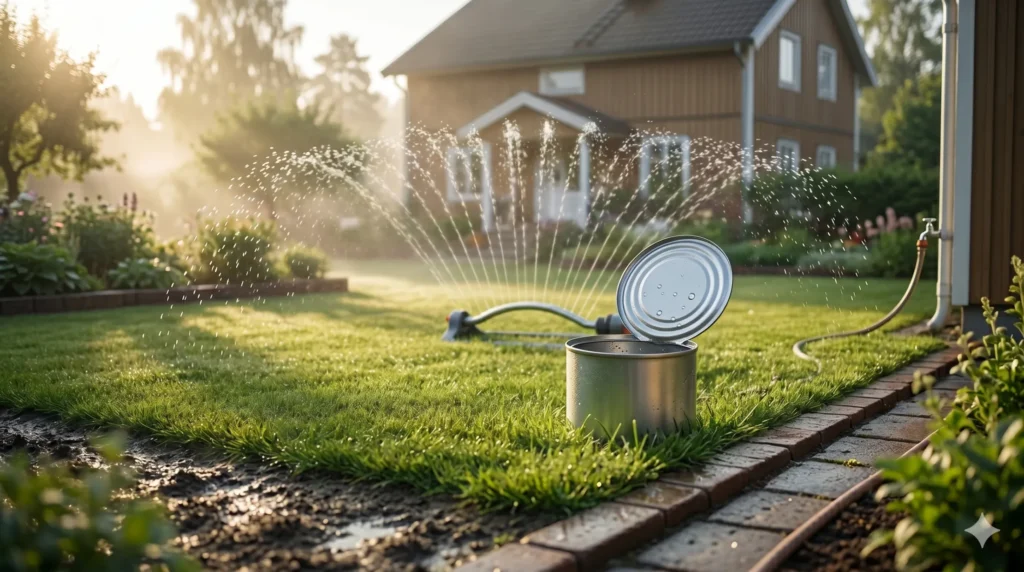
Not sure how much water your sprinklers actually produce? Put a few empty tuna cans or small glass jars around your yard before turning on your system. Run your normal watering routine, and then measure the depth of the water in the cans with a ruler. If the cans have 0.5 inches of water, you know you need to run that exact routine twice a week to hit your 1-inch target.
The Best Time of Day to Water
Timing is everything when dealing with clay soil in June and July.
Always water in the early morning, preferably between 4:00 AM and 8:00 AM.
- Why early morning? The winds are calm, temperatures are cool, and the water won’t instantly evaporate in the sun. It gives the slow-moving clay soil plenty of time to soak up the moisture before the midday heat hits.
- Why not evening? Watering at night keeps the grass blades wet for 10+ hours straight. Because clay holds onto moisture and creates a humid microclimate close to the ground, night watering is an open invitation for fungal lawn diseases and unwanted moss growth.
Watch Out for Cracks and Compaction
If you have neglected your watering routine and deep fissures are opening up in the ground, your soil structure is actively collapsing. Make sure to consult our guide on how to fix clay soil lawn cracks to safely rehydrate your yard.
Remember, severe summer crusting is almost always aggravated by compressed dirt beneath the surface. If your lawn feels like rock even after a gentle watering cycle, it is a sign that you need to open up the earth. Read through our comprehensive blueprint on how to fix compacted clay soil lawn to prepare your yard for long-term summer resilience.
Summary: Listen to Your Soil
When it comes to summer care for a clay lawn, less often is usually more. By switching to the cycle-and-soak method and watering deeply twice a week in the early morning, you will train your grass to become drought-resistant, keeping your LawnMender project vibrant and green all summer long.