Does Gypsum Help Clay Soil? When It Works and When It Won’t
Published
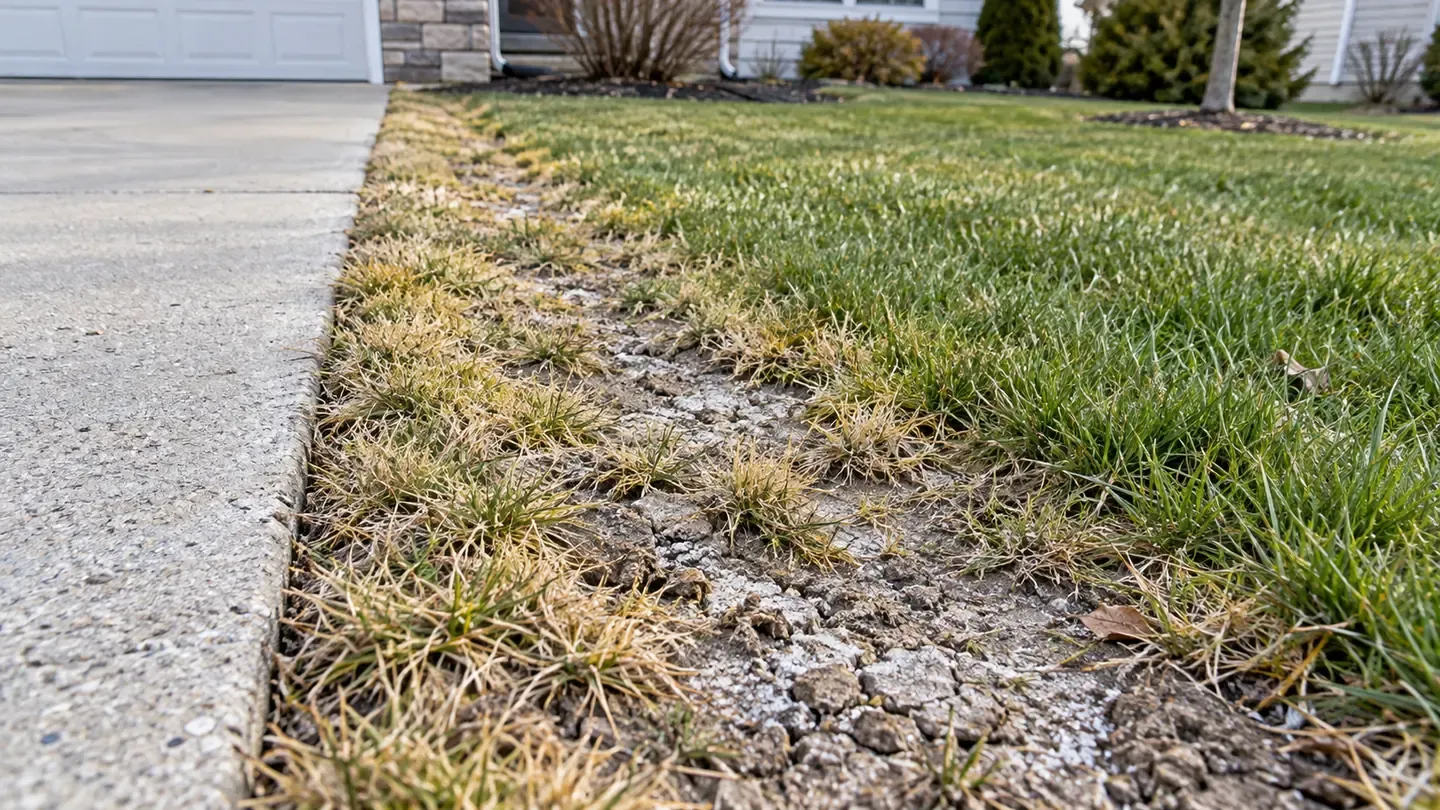
Gypsum is often sold as a clay breaker, and it is easy to see why people reach for it. You spread it like fertilizer, it is cheap, and the bag says it loosens heavy soil.
The catch is that gypsum fixes one specific problem: too much sodium. Where sodium is what is ruining the clay, gypsum works well. Where it is not, which describes most clay lawns, the bag mostly ends up as an expense.
What gypsum actually does
Gypsum is calcium sulfate. When it dissolves, the calcium takes the place of sodium on the clay particles, and water can then carry the sodium down and out of the root zone.
That matters because sodium makes clay fall apart into individual particles. They settle into a dense, sealed layer that sheds water, crusts on top, and drains poorly. Swapping that sodium for calcium lets the particles clump back together, and water starts moving through again.
Most clay is heavy for a different reason. The particles are simply very fine and pack tightly, especially under foot traffic and mowers. There is no sodium for gypsum to replace, so it has little to work on. In soils that are not dispersed by sodium, gypsum generally does not improve how water soaks in.
When gypsum is worth it
- Salt along driveways, sidewalks, and roads. Deicing salt is mostly sodium chloride. Year after year it builds up in the soil next to pavement, breaks down soil structure, and thins the grass. Gypsum is one of the few things that helps here.
- Naturally sodic or salty soils. These are found mainly in arid parts of the western United States and in coastal areas.
- A soil test that shows a sodium or calcium problem. If the lab reports high sodium, or low calcium, the decision is made for you.
Heavily weathered clays in parts of the Southeast are sometimes cited as another case where gypsum can help soil structure. Even there, let a soil test make the call rather than the label on the bag.
When it is a waste of money
For a typical clay lawn in the Midwest, Northeast, or anywhere the soil has not been salted, gypsum is unlikely to make a visible difference. Iowa State University, in the middle of heavy-clay country, sums it up plainly: gypsum is of little benefit to most Iowa soils.
A few other points worth knowing before you buy:
- It does not change pH. If a soil test says your lawn is too acidic, you need lime, not gypsum. If the pH is fine, adding lime “just in case” can cause problems of its own.
- It does not fix compaction. Packed clay needs air spaces opened up, and spreading a mineral on top will not do that.
- It is not completely harmless. On soils that do not need it, gypsum can wash out other nutrients, and on acidic soils it can lead to magnesium deficiency. Any benefit on non-sodic soil also tends to fade within months.
How to tell whether your clay has a sodium problem
Start with where the trouble is.
If the grass is thin or brown in a band along the driveway, sidewalk, or street, and healthier farther in, salt is a strong suspect. Salt damage usually shows up within about 30 feet of salted pavement. It is easy to confuse with drought or other stresses, though, so do not rely on looks alone.
A soil test settles it. Send separate samples from the damaged strip and from a healthy part of the lawn. Not every routine lawn test reports sodium, so ask the lab for it. Some labs express it as exchangeable sodium percentage (ESP) or sodium adsorption ratio (SAR). Our guide to testing clay soil explains how to take a good sample.
If the whole lawn struggles, the soil test shows no sodium issue, and you are not in an arid or coastal area, gypsum is not your answer.
Using gypsum on a salt-damaged strip
- Flush first, if drainage allows. In spring, soaking the area with at least 6 inches of water over several waterings helps move salt down and away from the roots.
- Spread pelletized gypsum. Pellets run through an ordinary lawn spreader much more cleanly than powder. Follow the bag’s lawn rate.
- Water it in. Gypsum needs water to dissolve and to carry the sodium away. Do not spread it on frozen ground.
- Fix the drainage if water stands. Gypsum only works where water can move through the soil. Soil next to pavement often drains poorly, which limits how much gypsum can do. If water sits there after rain, our guide to standing water on a clay lawn is the better place to start.
- Use less salt next winter. A little salt goes a long way, and deicers based on calcium chloride or calcium magnesium acetate do not add sodium to the soil.
If you need gypsum for a strip like this, Espoma’s pelletized Garden Gypsum is a straightforward choice. The 36-pound bag covers about 1,000 square feet at the label’s lawn rate. The label doubles the rate for exceptionally heavy clay.
What helps ordinary heavy clay instead
If your clay lawn has no sodium problem, two things do the work gypsum is often bought for:
- Core aeration. Pulling plugs opens channels for air and water in packed clay. It is the most direct fix for an established clay lawn. See our step-by-step guide to aerating a clay lawn.
- Organic matter. Compost spread thinly after aeration works its way into the holes and slowly improves the surface soil. Our guide to topdressing a lawn covers how much to use.
Sources
- Linda Chalker-Scott, Washington State University, The myth of gypsum magic
- Iowa State University Extension, Will an application of gypsum improve a clay soil?
- North Dakota State University Extension, Effectiveness of gypsum in the north-central region of the U.S.
- University of Wisconsin–Madison Extension, Reducing deicing salt damage this winter
- UConn Extension, Preventing and reducing salt injury on school properties
- Espoma, Garden Gypsum product information