How to Test Clay Soil for a Lawn (and When a Home Kit Is Enough)
Published
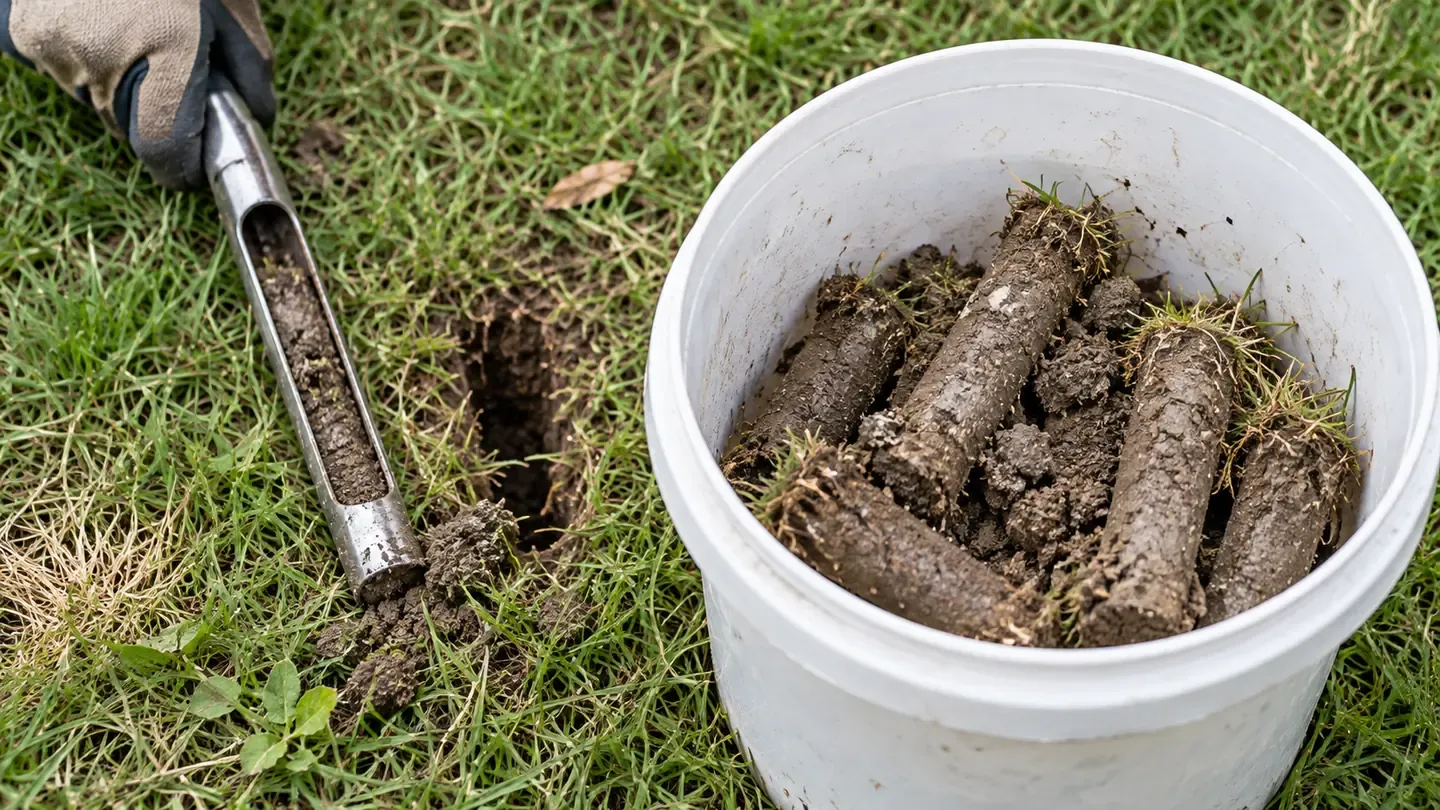
Clay soil tells you a lot about drainage and compaction, but almost nothing about nutrients. A clay lawn can be short on potassium, carry more phosphorus than it needs, or sit at a pH where grass struggles. You cannot tell which by looking at it, and guessing usually means buying the wrong bag.
A soil test replaces the guess with numbers. It is also the cheapest step in fixing a struggling lawn, since it costs less than a bag of fertilizer you might not need.
Lab test or home kit?
For most clay lawns, the lab test is the one to do first.
A routine lab test through your state’s land-grant university extension service measures pH and the main nutrients. It also comes back with recommendations: how much lime, if any, and what kind of fertilizer to use for turf. The UMass soil lab, for example, charges $20 for its standard test, and results typically arrive within a couple of weeks. Prices and methods vary by state, so use the lab that serves your area, since its recommendations are built around local soils.
A home kit is quicker and cheaper per test, and it is useful for a few specific jobs:
- checking whether pH is roughly where it should be before you plant
- comparing a struggling area with a healthy one
- keeping an eye on pH between lab tests, a year or two after liming
What a home kit cannot give you is an application rate. That gap matters more on clay than on sandy soil.
Why pH alone is not enough on clay
A pH reading tells you whether the soil is acidic. It does not tell you how much lime it takes to change that.
Clay soils hold more acidity in reserve than sandy soils, so they generally need more lime to move the pH by the same amount. Two lawns with the same pH reading can need very different lime rates. A lab measures that reserve acidity along with pH, and that is how it calculates a lime recommendation you can actually spread.
The same goes for nutrients. A lab result says how many pounds of a nutrient to apply per 1,000 square feet. A color chart says low, medium, or high.
How to take a good lawn sample
The result is only as good as the sample. A single scoop from one spot can be misleading.
- Pick one area per sample. Test the front and back lawn separately if they have been treated differently or look different. Keep obvious problem spots, such as a dead patch, as their own sample.
- Take 12 or more small cores. Use a clean trowel, spade, or soil probe, and collect them from random spots across the area.
- Go 4 to 6 inches deep. That is the root zone for turf. Leave out thatch and grass on top.
- Mix the cores in a clean bucket and take about a cup of the mixed soil.
- Let it air-dry on paper before you pack it. Do not send wet soil.
- Tell the lab it is a lawn. Most labs have a turf form or crop code. Without it, they cannot give turf-specific lime and fertilizer recommendations.
Avoid sampling when the soil is very wet, which on clay means sticky and smearing. Also wait six to eight weeks after liming or fertilizing, or the test measures what you just applied.
Late summer and fall are good times to test. Results arrive in time to lime or plan feeding before the next growing season.
When a home kit makes sense
If you want a quick answer without mailing anything, the Luster Leaf Rapitest 1601 is a simple, inexpensive kit. It includes 40 tests: 10 each for pH, nitrogen, phosphorus, and potash. You mix soil with water and the test powder, then compare the color with a chart.
It is best suited to rough checks and comparisons, like testing a patchy area next to a healthy one, or seeing whether a lawn you limed last year has moved in the right direction. With 10 pH tests you can sample several areas over a couple of seasons.
Treat the result as a range, not a prescription. If the kit suggests low pH or low nutrients across the lawn, that is a good reason to send a sample to a lab before you buy lime or fertilizer in quantity.
What a soil test will not tell you
A fertility test measures nutrients and pH. It does not diagnose poor drainage, compaction, insects, disease, weeds, or winter damage.
That matters on clay, where many lawn problems are physical rather than chemical. If water stands after rain, a soil probe will not push in, or grass thins along a path, fertilizer will not fix it. Start with our guides to compacted clay soil and standing water on a clay lawn.
If the lawn is turning yellow and you are not sure why, our yellow-lawn checklist helps separate a nutrient problem from a water or soil problem.