
Disclaimer: When you buy through links on our site, we may earn an affiliate commission at no extra cost to you.
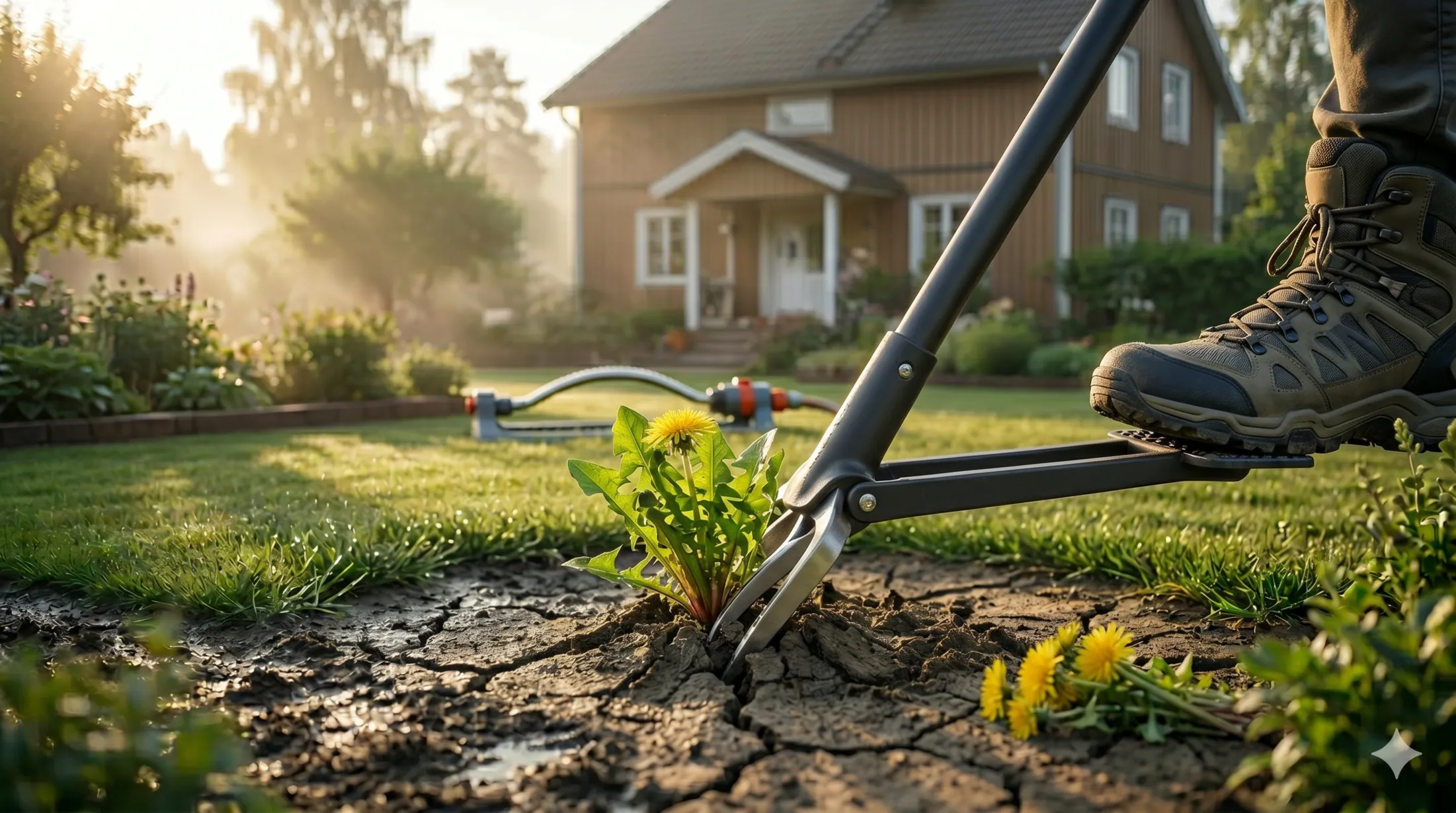
If you have ever tried to pry a deep-rooted dandelion out of dry clay soil with a cheap hand trowel, you know the recipe for instant frustration: a bent tool, a broken blister, and a taproot that is still snaps off and stays safely buried in the ground. Let one of the best weed pullers for hard clay soil save your back!
Heavy clay soil behaves like concrete during the summer months. To get weeds out, root and all, you need a tool with serious leverage, reinforced steel prongs, and a build quality that can withstand maximum foot pressure.
Standard big-box store weeders just won’t cut it here. In this guide, we review the absolute best weed pullers for hard clay soil so you can clean up your yard without breaking your back or your equipment
What to Look for in a Clay-Ready Weed Puller
Before picking a tool, you need to understand the structural demands of heavy soil. If you haven’t broken up your yard’s compaction yet, make sure to read our comprehensive guide on how to fix compacted clay soil lawn to make all yard work significantly easier.
When shopping for a weed extractor for tight soil, look for these three non-negotiables:
- Steel Tines/Prongs: Avoid aluminum or plastic heads. Clay requires heavy-duty forged or stainless steel claws that won’t flex under pressure.
- Reinforced Foot Platform: Stand-up weeders rely on your body weight to drive the prongs into the dirt. The foot pedal must be wide, sturdy, and securely welded to the shaft.
- Leverage Mechanism: A strong pivot point is crucial. Once the tines are in the ground, the tool needs to leverage the weed out without placing too much stress on the handle.
Top 3 Best Weed Pullers for Hard Clay Soil
Here are our top recommendations based on durability, build material, and leverage efficiency in stubborn dirt.
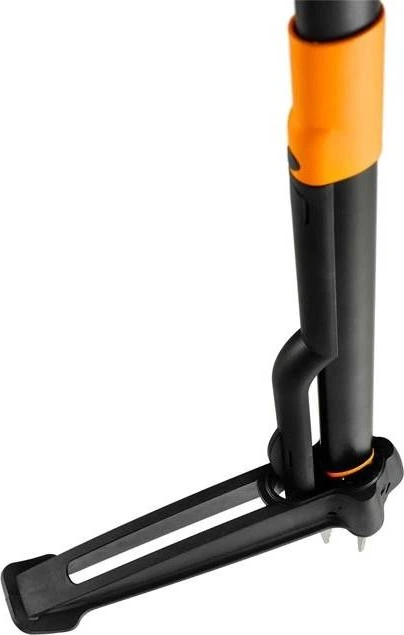
Fiskars is legendary for its ergonomic gardening gear, and the Xact model is an absolute beast in heavy soils. It features deep-reaching, stainless steel jaws that grab the weed’s core from four different angles.
The foot pedal is incredibly rigid, allowing you to use your full body weight to step the tool deep into baked clay. The ejection mechanism is smooth, meaning you don’t have to bend down to clean clay mud off the blades after every pull.
Best for deep taproots like dandelions. (To fully master the dandelion battle, check out our companion guide on how to remove dandelions from clay soil).
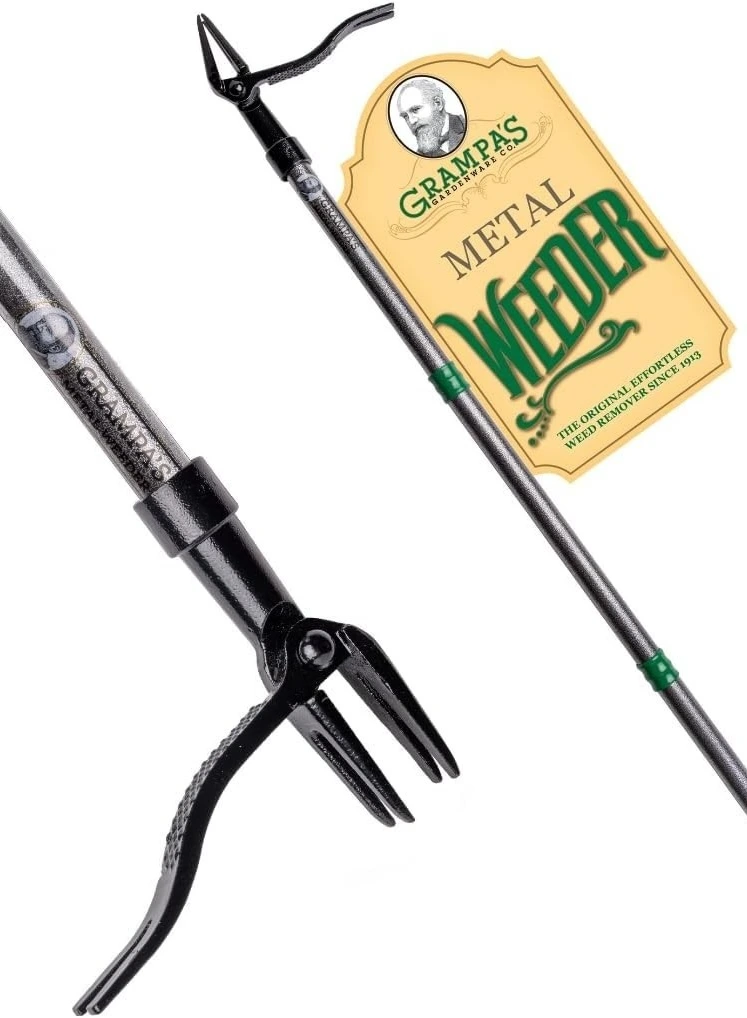
Grampa’s Weeder has been around since 1913 for a very good reason: its simple design uses pure mechanical leverage. It features a heavy-duty cast-iron claw attached to a long wooden handle.
There are no complex internal plastic moving parts to get jammed up with heavy clay muck. You step on the cast-iron pedal, tilt the long handle, and the lever action effortlessly pries the weed up out of tight ground.
Best for homeowners looking for a simple, indestructible tool that saves their lower back.
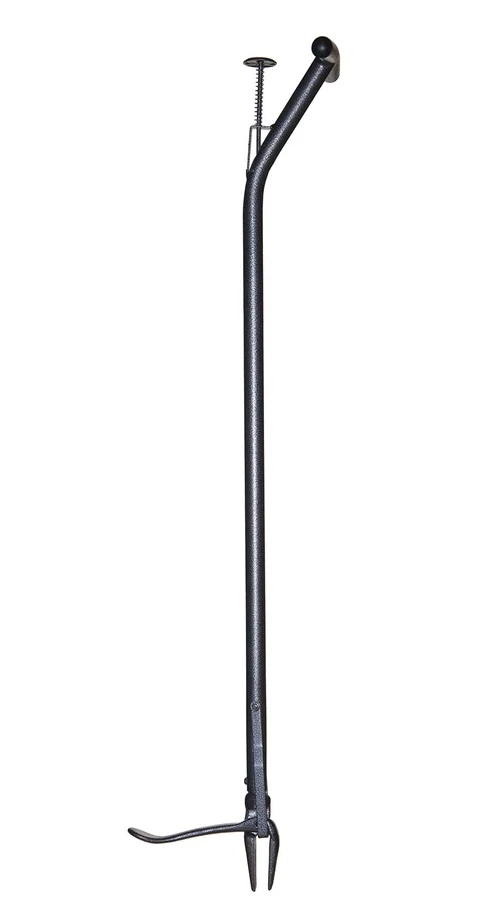
If you want something that feels like an industrial tool, the Yard Butler Rocket Weeder is fully constructed from powder-coated steel. It doesn’t use a claw mechanism; instead, it uses a plunge system with sharpened teeth.
The all-steel build means you can stomp on this tool with full force without fear of cracking a plastic frame. It punches clean holes through heavy clay, lifting out the root system cleanly.
Best for extremely compacted lawns where lighter stand-up weeders tend to twist or flex.
Tips for Pulling Weeds in Tough Clay
Even with the world’s best tool, fighting dry clay is hard work. Use these simple strategies to give yourself an unfair advantage:
- Water Before You Pull: Never try to weed a bone-dry clay yard in mid-July. Wait for a heavy rainstorm, or run your sprinklers using our specialized summer watering guide for clay soil. Wetting the ground softens the clay matrix, allowing the tool to slide in like butter.
- Get the Entire Root: Clay weeds like thistles and dandelions can regenerate from just a tiny piece of leftover root. Always make sure your tool’s claws go deep enough to capture the entire root core.
- Fill the Remaining Holes: Stand-up weeders leave a small hole behind. In a clay lawn, leaving these holes open invites compaction to return or new weed seeds to drop in. Fill them with a tiny scoop of compost or use a lawn leveling rake to smooth out the turf after a major weeding session.
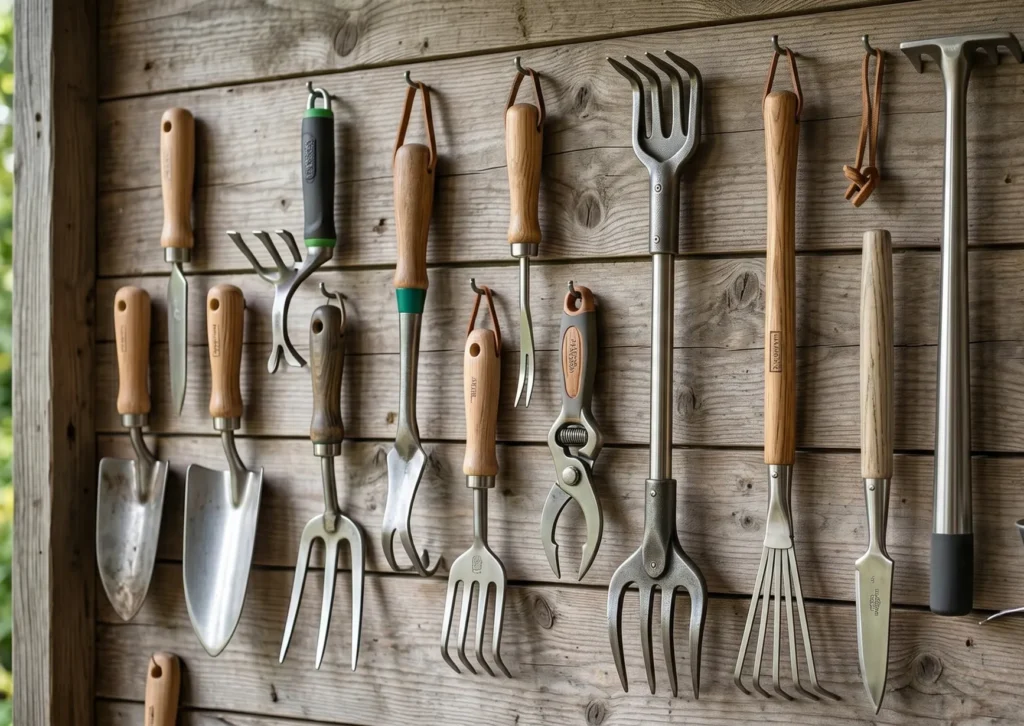
How to Maintain Your Weeding Tools in Heavy Clay
Clay soil doesn’t just make weeding physically difficult—it is also incredibly tough on your equipment. Heavy clay acts like a natural adhesive; it is highly abrasive, holds onto moisture, and can cause moving metal parts to jam or rust rapidly if you don’t take proper care of your tools.
To ensure your investment lasts for years instead of a single season, follow this quick post-weeding maintenance routine:
Clean Off the Mud Immediately
Never let wet clay dry and harden inside the mechanism of a stand-up weeder. Once clay bakes onto the metal prongs or the internal springs of tools like the Fiskars Xact, it becomes rock-hard and can cause the components to seize up. Keep a stiff-bristled brush or an old putty knife in your garden shed to scrape away large clumps of mud right after you finish your weeding session. Alternatively, give the business end of the tool a quick blast with a garden hose and wipe it dry with an old rag.
The Sand and Oil Bucket Trick
One of the best-kept secrets among professional gardeners dealing with heavy clay is the sand bucket method. Fill a 5-gallon plastic bucket with coarse builder’s sand and mix in about a quart of cheap vegetable oil or mineral oil.
When you are done cleaning your weed puller, plunge the steel tines up and down into the oily sand a few times. The sand acts as a mild abrasive that polishes away any remaining microscopic clay particles, while the oil leaves a fine, protective coating over the steel to prevent rust during storage.
Lubricate Moving Pivot Points
Tools that rely on a spring-loaded ejection system or a foot pedal pivot need regular lubrication. Once or twice a season, apply a few drops of multi-purpose oil (like WD-40 or a silicone-based lubricant) directly to the joints and moving hinges. This keeps the mechanism moving smoothly and ensures that heavy, sticky clay particles won’t track inside and grind down the moving components.
Summary
You don’t need chemical sprays to maintain a weed-free lawn. Investing in a high-quality, steel stand-up weed extractor like the Fiskars Xact or Grampa’s Weeder will allow you to quickly clear out stubborn invaders while keeping your back perfectly straight. Pair your tool with moist soil conditions, and you will win the war on clay weeds every single time.