Fall Leaves on a Clay Lawn: Mulch, Rake, or Sweep?
Published
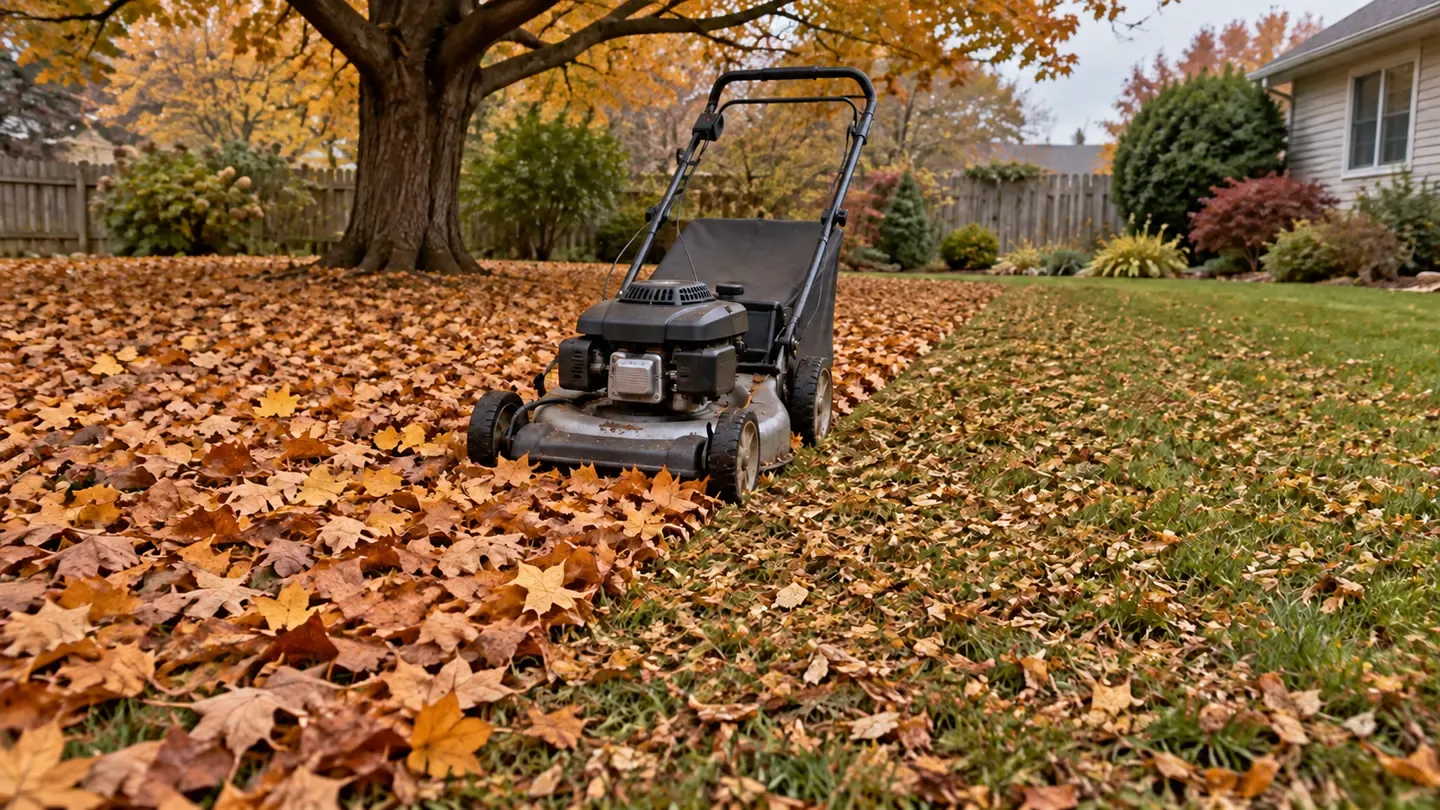
For most lawns, the easiest way to deal with fall leaves is also the best one: run the mower over them. Chopped leaves drop down between the grass blades and break down there. Mulching tree leaves this way does not harm the soil or the turf, and it does not add thatch or disease.
What hurts a lawn is a layer of whole leaves left lying on top of it. On clay, the other thing to get right is timing. Fall rain leaves heavy soil soft, and wheels or boots on soft clay do more lasting damage than the leaves ever would.
Why a layer of whole leaves is the real problem
Whole leaves that cover the grass block the light it needs, and a thick layer can smother and thin the turf before winter. A wet, matted layer also holds humidity against the grass. In areas with lasting snow cover, that is the setting where snow mold does its damage. It shows up in spring as round, matted patches, sometimes with a pinkish tinge.
Smothered grass often recovers, but slowly. The thin, open patches it leaves in spring give weeds an easy start.
Shredded leaves behave very differently. In the first year of a University of Wisconsin and Michigan State trial, plots covered with 6 inches of leaves stayed healthy when the leaves were mulched in. The same depth left whole badly damaged the grass.
How to mow leaves into the lawn
- Mow when the leaves are dry. Dry leaves shred easily. Wet ones clump, clog the mower, and get flattened instead of cut.
- Keep up with them. Mowing every week or so through leaf drop is much easier than tackling a deep pile at the end of the season. Six to eight inches of leaves at once is more than a mower can handle well.
- Make a second pass if needed. A second pass at a different angle cuts the pieces finer so they settle into the turf.
- Use what you have. A mulching mower or a mulching kit is built to chop leaves fine and drop them back into the lawn. A standard rotary mower can still shred dry leaves, though expect an extra pass.
How many leaves is too many?
Look at the lawn after you mow. If you can still see about half of the grass or more, you are fine. Once less than half of the lawn shows through, collect the extra and compost it.
Under big trees you may reach that point every week through leaf drop. Mulch what the lawn can take and collect the rest.
What mulched leaves do for clay soil
As shredded leaves decompose, they add organic matter to the soil surface, which helps soil structure over time. That is good news for clay, but keep your expectations realistic. It is a slow, shallow benefit and will not undo compaction or poor drainage. Core aeration and topdressing do that job, as our guide to fixing compacted clay soil explains.
Some common worries about leaves do not hold up:
- Oak leaves will not make the lawn acidic. Mulched leaves have no meaningful effect on soil pH.
- Mulching does not invite weeds. Research in Michigan even suggests it can reduce dandelions.
- Do not count on leaves as fertilizer. They return some nutrients, but much less than grass clippings do. If your lawn needs feeding, plan it from a soil test and our fertilizer guide for clay lawns.
On clay, wait for firm ground
Leaf cleanup often falls in wet fall weather, and wet clay compacts easily. Mowing, raking hard, or towing a sweeper across soft ground presses the soil tighter and can leave ruts.
Before you start, walk the lawn. If your footsteps leave dents, the surface squelches, or soil smears on your shoes, give it a few dry days. The leaves can wait a little longer. Compacted clay is much harder to put right than a late leaf cleanup.
Leaves that collect in low, wet spots stay soggy and will not mulch well, so rake those patches by hand once the ground firms up. If water stands in those spots for days, our guide to standing water on a clay lawn looks at the cause.
When raking or a sweeper is worth it
Mowing handles light to moderate leaf fall. Collecting makes more sense when:
- mature trees drop more leaves than the lawn can absorb, week after week
- leaves have already matted down wet and will not shred
- you want the leaves for compost or garden mulch anyway
For a small yard, a leaf rake is all you need. On a larger lawn with heavy tree cover, a lawn sweeper saves a lot of walking, but only if you will use it every fall. Both picks below collect loose, dry leaves. Neither will lift a soggy mat, and both need firm ground.
The Brinly makes the most sense on a large lawn if you already own a lawn tractor or riding mower. Its 42-inch sweep path and 20-cubic-foot hamper cut down the number of trips, and you can dump it without leaving the seat.
The VEVOR is the better fit for a smaller lawn, or if you have no tractor. You push it like a mower, and the 7-cubic-foot bag comes off for emptying. For a couple of trees and a small lawn, a rake is still simpler.
Our lawn sweeper guide compares both in more detail, including the gate clearance and towing setup to check before you buy.
What to do with collected leaves
Compost them, or spread shredded leaves as mulch under shrubs and in garden beds. Avoid raking them into the street. Leaves piled at the curb release phosphorus into storm drains, and from there into lakes and streams. If your town collects yard waste, bag or pile them the way it asks.
Sources
- Purdue University Turfgrass Science, What to do with all those falling leaves? and Keep mowing to mulch those tree leaves
- University of Minnesota Extension, Fall leaf mulching is good for your lawn
- WinterTurf (University of Wisconsin–Madison), Tree leaf mulching impacts on lawn health