Dethatching vs Aeration: What Does Your Clay Lawn Actually Need?
Published
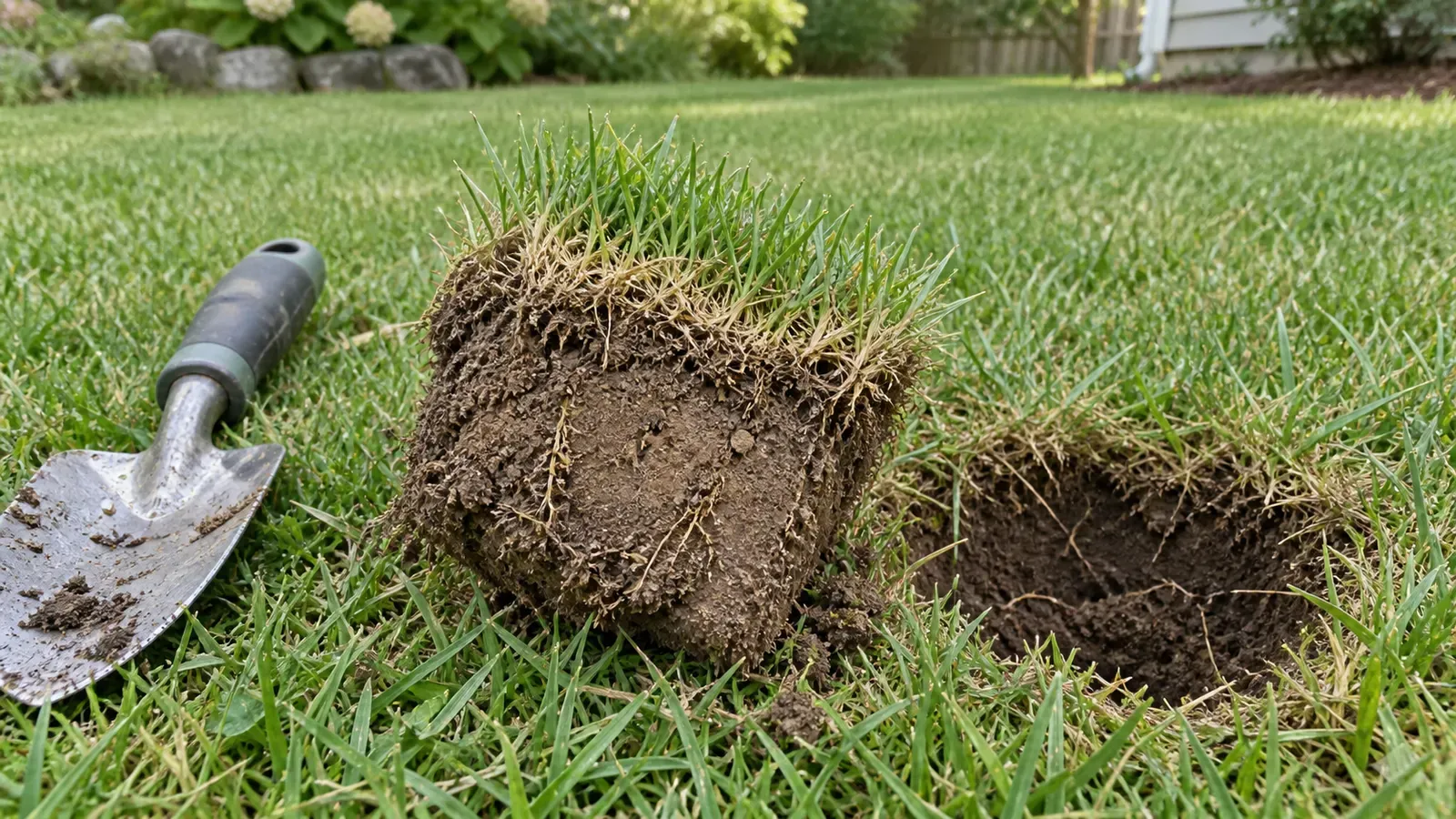
Before you book a machine or spend a weekend pulling material out of the lawn, lift a small sample. A spongy surface and hard ground underneath are different problems. Treating one will not automatically fix the other.
This guide helps you decide which job is justified, including when leaving the lawn alone is the better choice.
Look above the soil, then into the root zone
Thatch sits between the green grass and the mineral soil. It is a woven layer of living and dead stems and roots. Loose brown leaf blades or a few mower clippings on top are not the same thing. A thin thatch layer is normal and can help cushion the surface and slow moisture loss.
Compaction happens within the soil. Repeated pressure squeezes the spaces that roots, water and air depend on. Clay is more vulnerable to this, especially under traffic when wet, but a clay lawn can still have good soil structure and healthy roots.
A dethatcher lifts or cuts through the fibrous layer. A core aerator removes small plugs from the soil beneath it. Coring can also help manage thatch over time, but it does not strip out a thick mat in one visit.
Check a few places before choosing a treatment
Compare a trouble spot with a healthier, less-traveled part of the lawn. One sample beside the gate should not decide what you do to the whole yard. Before cutting or probing, locate shallow irrigation, cables and other buried obstacles.
1. Measure the thatch itself
Cut a small wedge of turf deep enough to include some soil, then look at it from the side. Find the fibrous brown band below the green growth and above the mineral soil. Measure that band with a ruler, leaving the grass blades and underlying soil out of the measurement. Replace the sample afterward.
About half an inch (13 mm) is a useful point to investigate more closely, not a universal trigger for aggressive removal. Check whether the layer is interfering with wetting, whether roots are concentrated in it, and whether the lawn is declining. Species and growing conditions affect how much thatch becomes troublesome. A springy feel alone is not a measurement.
Tall fescue and perennial ryegrass are less prone to heavy thatch than Kentucky bluegrass, bermudagrass or zoysia. Do not assume every brown layer in a fescue lawn needs ripping out.
2. Check the soil when it is moderately moist
Push a screwdriver or soil probe gently into several spots, comparing similar soil moisture. Persistent resistance in a worn traffic lane is more useful evidence than resistance everywhere during a dry spell. Hard, dry clay can resist a probe without proving compaction.
Look at the soil sample too. Shallow or restricted rooting alongside firm soil and repeated traffic strengthens the case for compaction. None of these signs alone settles the diagnosis. If the tool hits an abrupt solid obstruction, stop rather than forcing it through.
3. Match the findings to the job
On a phone, swipe across the table to read each suggested action.
| What you find | Best next step | What to avoid |
|---|---|---|
| Excess thatch, soil below is not compacted | Manage the thatch. Use removal where the mat is obstructing water or healthy rooting. | Adding aeration simply because the soil is clay. |
| Thin thatch, compacted upper root zone | Core aerate the affected area during active growth. | Dethatching healthy turf to reach a problem below it. |
| Excess thatch and shallow compaction | Plan for both problems. Coring may be enough initially for a modest layer; substantial thatch can need separate removal. | Assuming both machines must run on the same day. |
| Thin thatch, no compaction, healthy grass | Neither treatment. Continue suitable mowing, watering and traffic management. | Turning either job into an automatic annual chore. |
| Puddles, shade-related thinning or unexplained damage | Identify the water, light or damage problem before treating. | Using dethatching or aeration as a cure for every bare patch. |
If your checks point to shallow compaction, follow our core-aeration steps for a clay lawn to plan the timing, test the soil, and check the work as you go.
If both problems are present, what comes first?
Start with the severity of each problem and how well the grass can recover. “Both problems” does not always mean “both treatments this weekend.”
For shallow compaction with a modest thatch buildup, core aeration can be the first and only immediate job. Soil brought to the surface helps decomposition within the thatch. Let the lawn recover and reassess the layer before deciding whether mechanical removal is still needed.
For a substantial mat that needs removal, do not assume dethatching always comes first. Severe thatch can require aeration before vertical mowing. A lawn rooted largely in thatch is especially vulnerable to being torn up, so have a turf professional assess a heavily matted or weak lawn before an aggressive pass. The University of Minnesota’s thatch guidance specifically covers this aeration-first situation.
Where the grass is vigorous, the mat can be removed safely and core aeration is also justified, removing and collecting thatch before coring can be a practical sequence. It clears the loose material before soil plugs are left behind. That is a cleanup choice, not a rule that overrides grass condition, species-specific guidance or the machine instructions.
If the first job leaves the lawn badly thinned or the weather turns stressful, postpone the second. There is no fixed waiting period that suits every lawn. Recovery means renewed growth and turf that can tolerate more disturbance, with enough growing season remaining. Finish disruptive work before sowing rather than running a dethatcher through new seedlings.
Dethatching, scarifying and aerating: read the working end
Names overlap. In British lawn care, scarifying commonly describes raking out thatch and surface debris. In equipment listings, a scarifier often has a bladed reel, while a dethatcher may use spring tines. Check the attachment and manual instead of relying on the name.
- Thatch rake: Curved teeth or blades lift material by hand. Useful for a small affected patch, but tiring across a whole lawn.
- Spring-tine dethatcher: Combs and lifts surface material. A tow-behind tine rake and a powered rotating reel do not necessarily remove the same depth of mat.
- Bladed scarifier or vertical mower: Cuts into the thatch. Depth, blade spacing and the grass species determine how disruptive the job is. A deeper setting is not automatically better.
- Hollow-tine core aerator: Extracts soil cylinders. A manual tool suits spot work; widespread compaction usually makes a powered rental or service more practical.
- Simple spike tool or aerator shoes: Push points into the soil without extracting plugs. They are not a substitute for hollow tines when relieving compacted clay is the goal.
For actual equipment choices, use our dethatcher guide or manual core aerator comparison. The core-versus-spike guide explains the soil mechanics in more detail.
Be particularly careful with St. Augustinegrass and centipedegrass: repeated vertical-mower passes can injure or kill turf. Get species-specific blade spacing and operating advice before renting a machine.
Choose a recovery window, not a date on someone else’s calendar
For cool-season grasses, including fescues, perennial ryegrass and Kentucky bluegrass, late summer into early fall is often the best opportunity for disruptive thatch removal. Core aeration also fits active spring growth when conditions allow, although fall often pairs better with needed overseeding. Leave enough time for recovery before winter.
For warm-season grasses, such as bermudagrass, zoysia, St. Augustinegrass and centipedegrass, wait until spring green-up has progressed into strong growth. Late spring into early summer often fits. Do not copy a cool-season autumn renovation schedule onto grass heading toward dormancy.
Local climate changes these windows. Identify your grass and use timing advice from a local extension service or horticultural adviser alongside the actual forecast. Active growth matters more than the season’s name, and even summer-growing grass should not be aggressively treated during drought stress.
For coring, the soil should admit the tines and release plugs without being muddy. If clay smears, sticks heavily or takes wheel ruts, let it dry. If tines barely enter dry ground, wait for suitable moisture rather than adding force. Check below the surface, not just whether the grass is wet.
Dethatching also needs firm, workable ground and enough moisture for recovery afterward. Avoid frozen, saturated, dormant or heat-stressed turf. Follow the equipment’s operating limits, test a small strip, and stop if healthy plants are being pulled out.
If a thin cool-season lawn also needs seed, our fall overseeding guide covers preparation, seed contact and watering after you have decided which treatment is necessary.
When neither treatment solves the real problem
Water keeps collecting in the same place. Watch where it comes from and where it can leave. A downspout, low spot, poor grading or a high water table needs a water-management solution. Core aeration can help shallow compaction, but holes do not create an outlet. Start with standing water on a clay lawn.
Grass keeps thinning beneath a tree or beside a building. Less light can mean less growth even when the soil is fine. Check whether the grass suits the available sun. A shade-tolerant planting or a bed may make more sense than repeatedly disturbing struggling turf.
Heavy equipment left deep ruts or a hard layer below normal tine reach. Ordinary lawn coring cannot loosen soil it never reaches. Get the depth and drainage assessed before deciding on renovation or specialist cultivation. Our heavy-equipment lawn repair guide helps separate surface damage from deeper work.
Patches appeared suddenly or have a distinct pattern. Drought, scalping, fertilizer spills, pests and disease can all damage grass. Inspect the affected plants and recent lawn-care history. For unexplained or spreading damage, ask a local extension service or horticultural adviser to help identify the cause before using a machine.
Treat the areas that need help. A compacted route to the shed and a thatchy patch of spreading grass may need different care, while the rest of the lawn needs neither.